
 русский
 عربى
عربى
 Tiếng Việt
The pyrolysis furnace and cleaning booth are professional environmental protection surface treatment equipment. The pyrolysis furnace adopts high-temperature cracking technology to remove old paint, g...
See Details
Yueze Environmental Protection provides one-stop compliant industrial surface treatment solutions with professional tech and fine craftsmanship.
 Get Inquiries
2026-07-02
Content
An automatic conveyor system is useful across industries because it replaces manual material handling with continuous, electrically driven transport — boosting throughput, reducing labor costs, and improving workplace safety simultaneously. Whether in automotive assembly, electronics production, food processing, logistics warehousing, or heavy industrial coating lines, the core value is the same: consistent, uninterrupted material flow that keeps every downstream process fed on time.
The sections below break down exactly how each major industry benefits, what conveyor types are typically used, and what performance factors to compare before selecting a system.
Manual handling relies on workers to carry, push, or lift materials between stations. This creates variability: output depends on shift size, fatigue level, and individual pace. An automatic conveyor system removes this variability by driving materials at a controlled, programmable speed — 24 hours a day if needed.
Key structural differences include:
These advantages compound across industries, which is why automatic conveyor systems appear in facilities ranging from small electronics workshops to large-scale foundry and automotive coating plants.
Not all conveyor systems are interchangeable. Each type is engineered for a specific combination of load weight, product shape, required floor space, and process environment. The four most widely deployed types in industrial settings are described below.
Floor conveyors run at ground level and are well-suited for heavy workpieces such as engine blocks, counterweight castings, steel frames, and large fabricated parts. Because the load travels on the floor track, there is no overhead structure to engineer around, making installation simpler in facilities with low ceiling heights. Floor conveyors are common in foundries, construction machinery manufacturing, and heavy equipment coating lines.
Roller table lines use motorized rollers to move flat-bottomed products — sheet metal panels, wooden boards, plastic totes, and packaged goods — in a straight or slightly angled path. They are standard equipment in logistics sorting centers, electronics manufacturing, and packaging lines where products need to accumulate at inspection or labeling stations without backing up the entire line.
Overhead conveyors hang workpieces from a ceiling-mounted track, freeing the floor for workers and mobile equipment. This is the preferred solution for surface treatment processes — powder coating, painting, electroplating — because the part can move continuously through pre-treatment tanks, coating booths, and curing ovens in a single uninterrupted loop. Automotive parts, metal furniture, and appliance housings are routinely processed on general overhead conveyor systems.
Self-propelled hoist systems give each carrier its own motor and independent control, allowing individual workpieces to stop, reverse, or change speed without affecting adjacent carriers. This is critical when different parts need different dwell times — for example, a thick casting that requires longer immersion in a pre-treatment bath versus a thin stamped part that needs only a brief dip. These systems are widely used in high-mix, low-volume production environments, including EV battery enclosures, aerospace components, and precision industrial equipment.
| Conveyor Type | Load Characteristic | Typical Industries | Key Advantage |
|---|---|---|---|
| Floor Conveyor | Heavy, large parts | Foundry, heavy equipment, mining | High load capacity, simple installation |
| Roller Table Line | Flat-bottomed products | Logistics, packaging, electronics | Accumulation without line stoppage |
| General Overhead | Hanging parts, surface treatment | Automotive, appliance, metal furniture | Frees floor space, integrates with coating process |
| Self-Propelled Hoist | Mixed products, varying dwell times | EV manufacturing, aerospace, precision parts | Independent carrier control per workpiece |
Automotive production demands the highest level of repeatability. A body panel that takes 30 seconds longer than planned at one station throws off every subsequent station on the line. Automatic conveyor systems enforce timing discipline by moving components at a fixed, programmable pace through welding, priming, painting, and final assembly zones.
For EV manufacturing specifically, the challenge is handling large, heavy battery enclosures and motor housings that require precise surface treatment before assembly. Overhead conveyor systems route these parts through alkaline cleaning, phosphating, and powder coating in sequence, with no manual transfer between stages. This matters because contamination at any handoff point can cause coating adhesion failures that only appear after the vehicle is delivered to the customer.
Self-propelled hoist systems are especially valuable in EV plants because battery casings of different thicknesses require different pre-treatment dwell times. Independent carrier control allows each part to follow its own recipe without slowing the overall line.
In surface treatment — which includes powder coating, wet painting, electroplating, and anodizing — the conveyor system is not just a transport tool; it defines the process sequence itself. Parts must pass through pre-treatment, coating application, and curing in a fixed order and at a controlled speed. Any pause creates defects: uneven film thickness, drips, or inadequate curing.
Overhead conveyor systems are the dominant solution for coating lines because they:
For foundry counterweight castings — which can weigh several hundred kilograms — floor conveyor systems combined with overhead hoists handle the transition from raw casting through shot blasting, primer application, and topcoat in a single automated flow.
Electronics production operates at the opposite end of the weight spectrum from automotive and foundry work, but the need for consistent, contamination-free material flow is equally stringent. Circuit boards, display panels, and semiconductor components must not be touched by ungloved hands or exposed to particulate contamination during transfer.
Roller table automation lines and belt conveyors address this by creating a closed material path from component insertion through soldering, inspection, and final packaging. The system can be enclosed within cleanroom partitions or equipped with ionizing air bars to neutralize static, depending on the sensitivity of the products being handled.
Conveyor speed in electronics lines is often synchronized with the cycle time of pick-and-place machines and reflow ovens, so the throughput of the entire line is governed by a single programmed parameter rather than by how quickly individual operators can move boards between stations.
Distribution centers move thousands of packages per hour. Without automatic conveyor systems, sorting this volume requires proportionally large workforces and introduces a high rate of misrouting errors. Conveyor systems in logistics typically include:
The measurable benefit is throughput accuracy: automated sortation systems consistently outperform manual sorting in both speed and error rate, which directly reduces the cost of re-delivery and customer complaints.
Food processing lines must meet strict hygiene standards while handling products at speeds that manual labor cannot sustain. Automatic conveyor systems in this sector are designed with stainless steel frames, sealed bearings, and washdown-rated motors that can withstand daily cleaning with high-pressure water and chemical sanitizers.
Typical applications include transporting raw ingredients from storage to processing, moving products through freezing or baking tunnels, and feeding packaging machines at consistent intervals. The conveyor also serves as the backbone for checkweighers, metal detectors, and vision inspection systems that verify product quality in-line without requiring sampling stops.
Because food lines often handle fragile or irregularly shaped products — fresh produce, baked goods, bottled drinks — conveyor design must control acceleration and deceleration precisely to avoid product damage or spillage.
In mining, quarrying, and bulk material handling, automatic conveyor systems move ore, coal, aggregate, and granular raw materials over distances that range from tens of meters to several kilometers. The alternative — truck haulage — is slower, more fuel-intensive, and subject to road conditions and driver availability.
For in-plant heavy industry applications such as steel mills and cement plants, floor conveyor systems and heavy-duty belt conveyors transport raw materials between processing stages — crushing, screening, mixing, and loading — at controlled feed rates that protect downstream equipment from overload.
Continuous operation is the defining advantage in this sector. A bulk material conveyor running at a steady throughput rate produces far lower cost per tonne than equivalent truck operations, and its energy consumption scales directly with load rather than with the number of vehicles maintained in a fleet.
Selecting the wrong conveyor type for a given application creates problems that are expensive to fix after installation. The following factors should be evaluated before specifying a system:
Every conveyor has a rated load capacity per meter of track and a maximum single-point load. Exceeding either causes premature wear of the drive chain, rollers, or track. Provide actual workpiece weight and the heaviest single load that will ever be placed on the system — not an estimate — to the manufacturer before sizing the drive motor and structural members.
Conveyors operating inside paint booths, plating baths, or curing ovens are exposed to chemicals, high temperatures, and humidity that standard industrial conveyors are not designed to handle. Specify corrosion-resistant materials, sealed bearings, and high-temperature lubricants for these environments. Conveyors in food processing must additionally meet food-grade material requirements.
Calculate the number of parts or tonnes per hour the system must deliver to meet production targets. This determines conveyor speed, carrier spacing on overhead systems, and the power rating of the drive unit. Build in a margin of at least 15–20% above current requirements to accommodate future capacity increases without a full system replacement.
Overhead conveyors require sufficient ceiling height and structural support above the track. Floor conveyors require clear aisle paths and may conflict with forklift routes. Non-standard customization — curved sections, elevation changes, transfer stations between conveyor types — is available from manufacturers who offer full-process production and on-site commissioning, which avoids the mismatches that occur when standard off-the-shelf components are forced into layouts they were not designed for.
A conveyor system that stops unexpectedly halts the entire production line. Evaluate the availability of spare drive chains, motor controllers, rollers, and suspension components before committing to a supplier. Systems backed by long-term spare parts supply and after-sales support reduce the risk of extended downtime when a component eventually wears out.
| Industry | Primary Application | Primary Benefit |
|---|---|---|
| Automotive & EV | Body assembly, surface coating, battery enclosure treatment | Takt time control, coating consistency |
| Surface Treatment / Coating | Pre-treatment, powder coating, curing | Defect elimination, process sequencing |
| Electronics | PCB transport, reflow oven integration | Contamination control, speed synchronization |
| Logistics & Warehousing | Induction, sortation, accumulation | Throughput volume, sortation accuracy |
| Food & Beverage | Processing, freezing/baking tunnel, packaging feed | Hygiene compliance, in-line quality inspection |
| Mining & Heavy Industry | Bulk material transport, inter-stage feeding | Continuous operation, low cost per tonne |
| Foundry & Counterweight | Casting handling, shot blasting, coating | Heavy load handling, full-process automation |
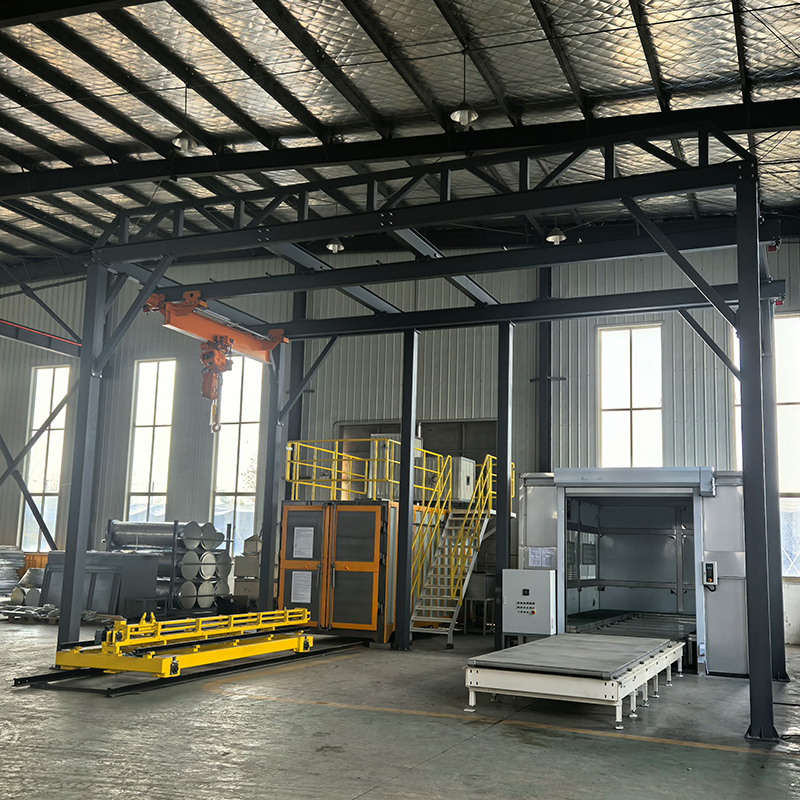
The pyrolysis furnace and cleaning booth are professional environmental protection surface treatment equipment. The pyrolysis furnace adopts high-temperature cracking technology to remove old paint, g...
See Details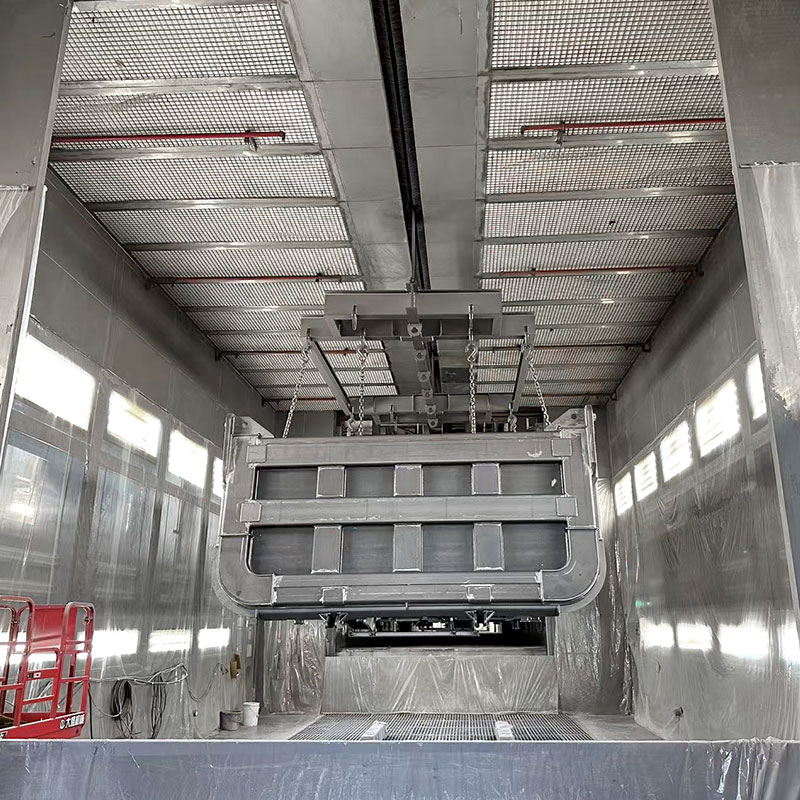
Manual spray booth is a small & economical painting workstation, designed for manual spraying operation. Equipped with efficient paint mist filtration and exhaust system, it ensures clean air and ...
See Details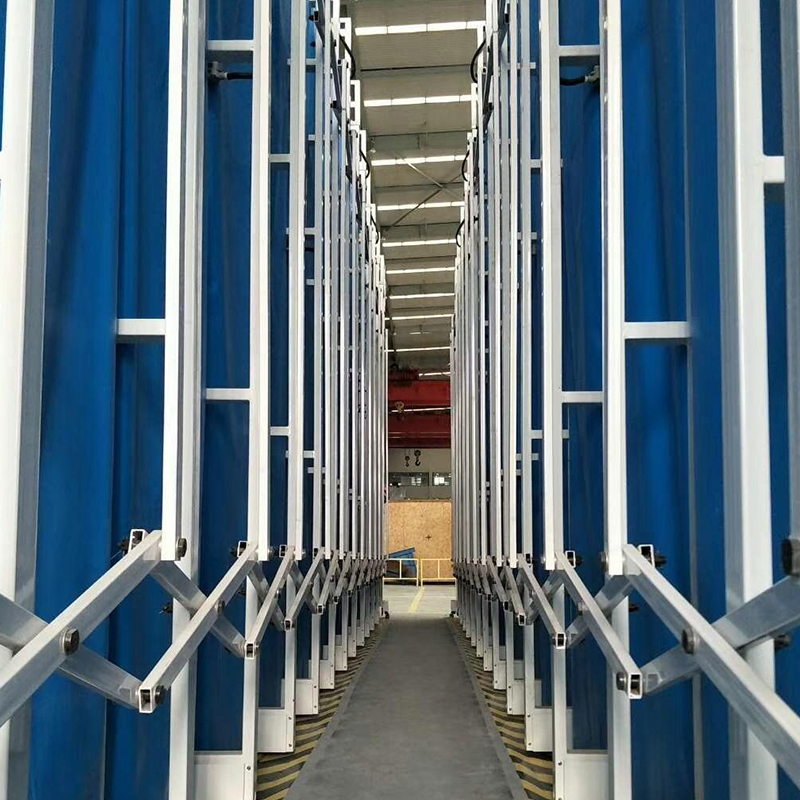
The retractable mobile spray & sanding booth is a flexible, space-saving, and multi-functional coating workstation. With a telescopic movable structure and integrated dust & paint mist filtrat...
See Details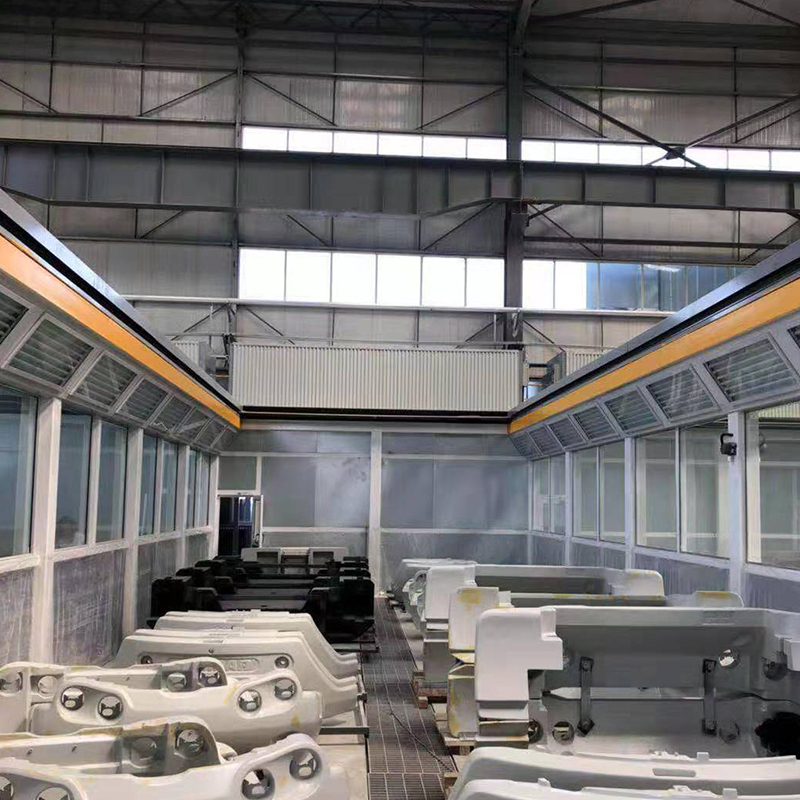
The retractable mobile spray & sanding booth is a flexible, space-saving, and multi-functional coating workstation. With a telescopic movable structure and integrated dust & paint mist filtrat...
See Details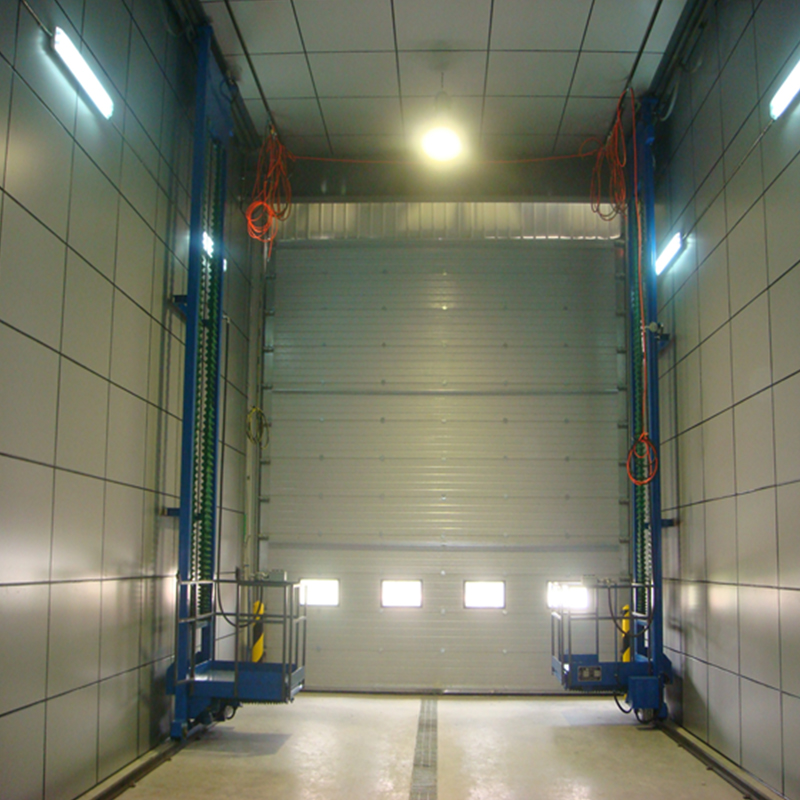
We supply high-quality blasting room and automatic shot blasting machines. The equipment adopts mature surface treatment technology, realizing rust removal, oxide layer cleaning and surface roughening...
See Details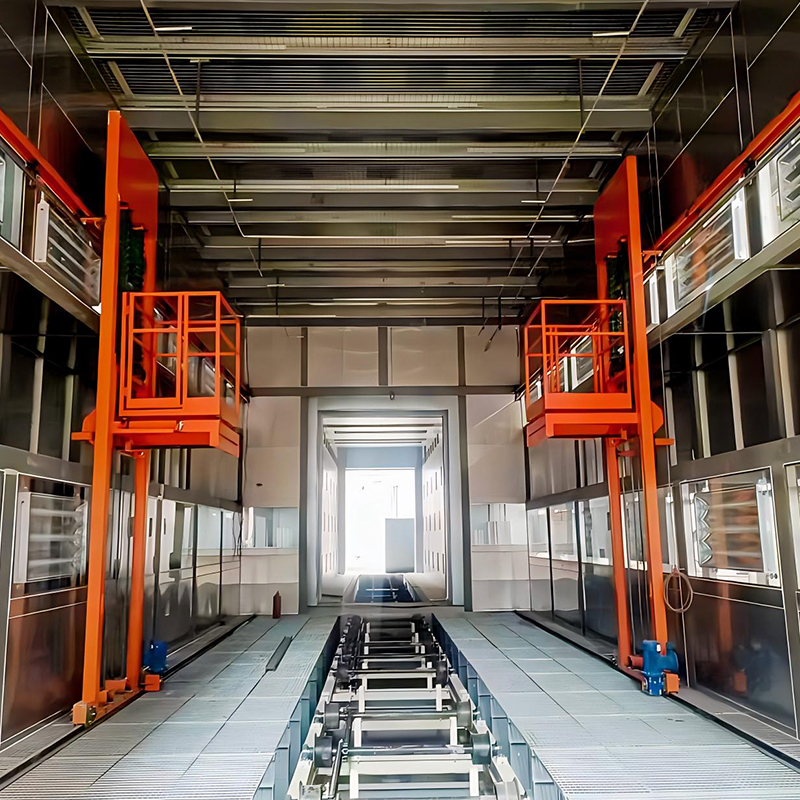
3-axis platform lifts feature three-dimensional movement of X, Y, and Z axes. Flexible positioning, stable lifting, and precise operation. Suitable for multi-angle operation and workpiece docking in i...
See DetailsBuild Your Customized Industrial Coating System
Send us your workpiece information, production capacity, coating process, workshop layout, and environmental requirements. Yueze will help evaluate your project and develop a suitable coating, conveying, drying, and environmental treatment solution.
Main menu
Products
Contact Us
Company Address:
No. 12, Park Avenue, Shanggang Industrial Park, Jianhu, Yancheng City, Jiangsu Province
Message Us Right Now!

Follow us: