What Is a Painting Line for Grain Tank Truck Body
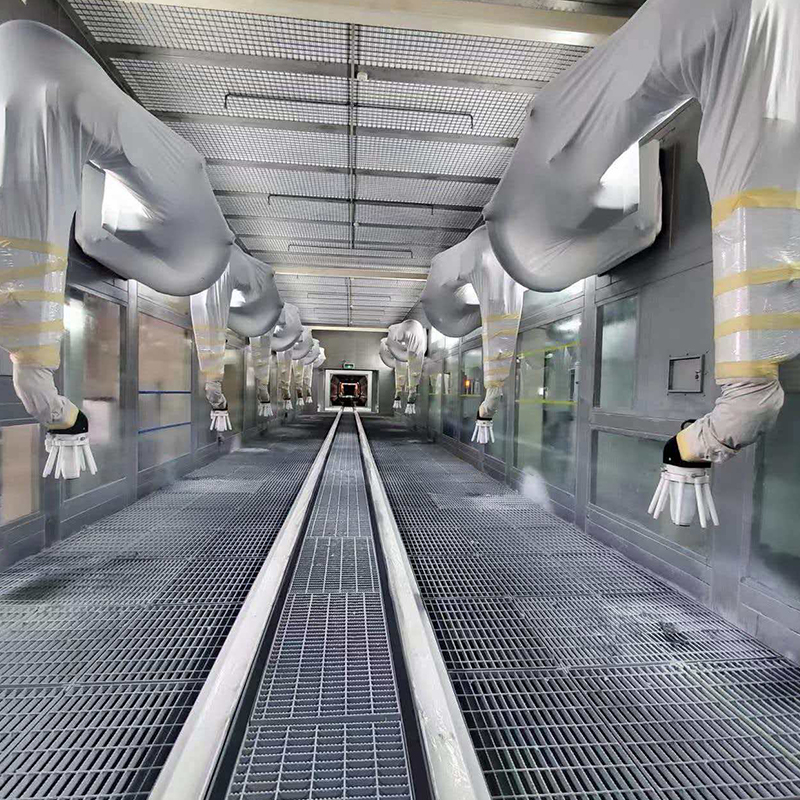
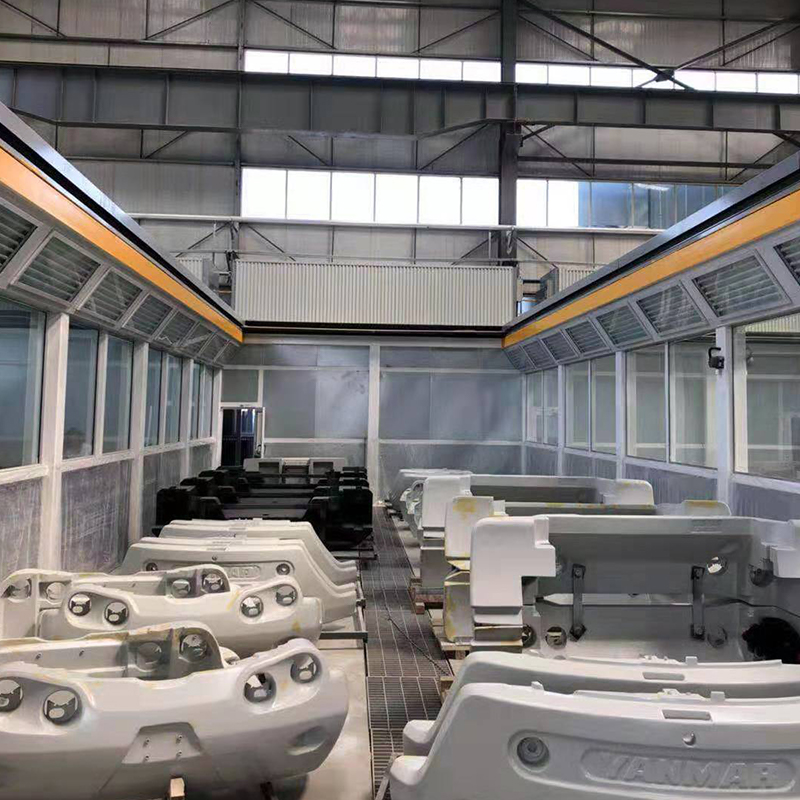
A Painting Line For Grain Tank Truck Body is designed to coat the large cylindrical or oval tank shells used to transport bulk grain, feed, and similar dry cargo. Unlike flat cargo box bodies, a grain tank has continuous curved surfaces, welded seams running the full length of the tank, and end caps that need even coverage without pooling or sagging on the rounded contours.
Grain tank bodies also face repeated abrasion from loading and unloading cycles, along with outdoor exposure during long-haul transport, so the coating line has to support both a durable exterior finish and a corrosion-resistant interior surface.
Key Advantages of a Dedicated Grain Tank Coating Line
Coating a curved tank shell on generic flat-panel equipment often leads to uneven film thickness. A dedicated line is built around the tank's specific shape and handling needs.
Table 1: Advantages of a dedicated painting line for grain tank truck bodies
| Line Feature |
Practical Benefit |
| Rotating or tilting conveyor fixtures |
Keeps spray angle consistent across the tank's curved surface |
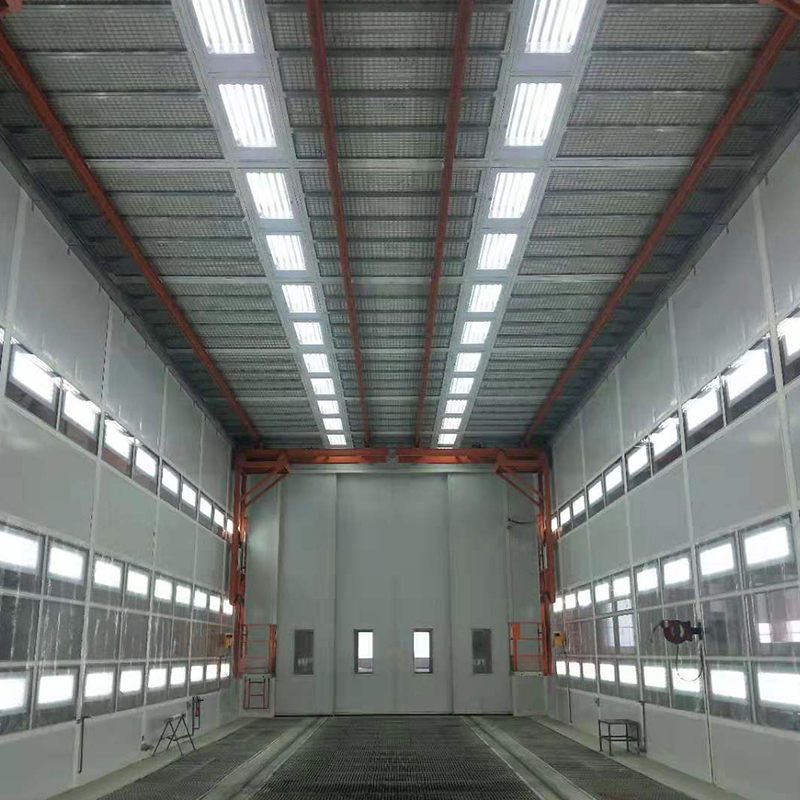
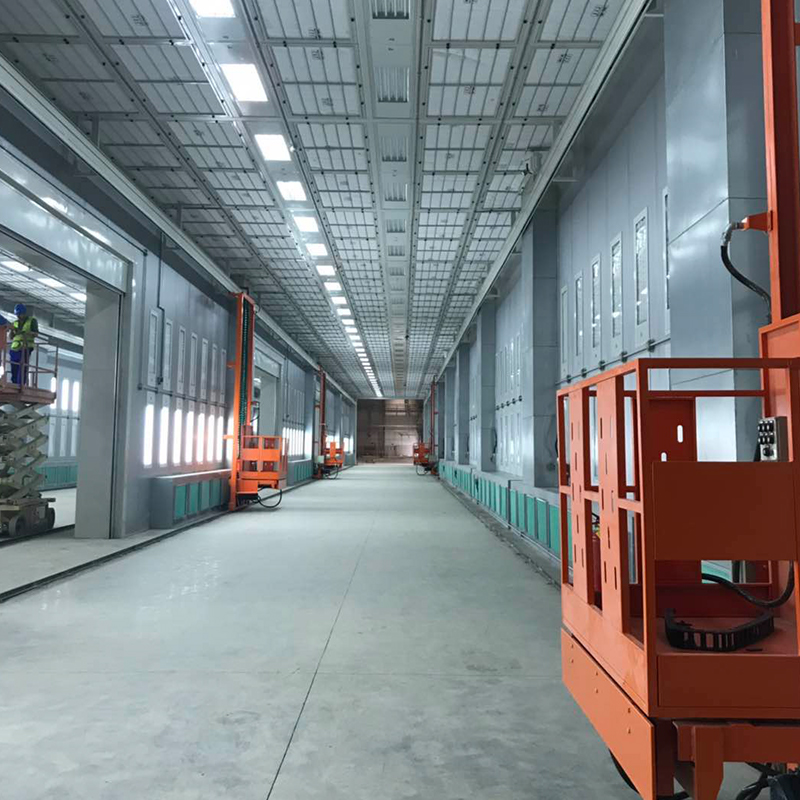
| Extended-length spray and bake booth |
Accommodates full-length tank bodies in a single pass |
| Abrasion-resistant coating application |
Supports durable exterior finishes for repeated loading cycles |
| Infrared radiation drying |
Cures large curved surfaces evenly without excessive cycle time |
How the Grain Tank Painting Process Works
A grain tank body typically follows a fixed sequence, with each stage adjusted for the tank's cylindrical geometry rather than flat panels.
Standard Process Sequence
- The welded tank shell is cleaned and pretreated to remove oil, dust, and welding residue
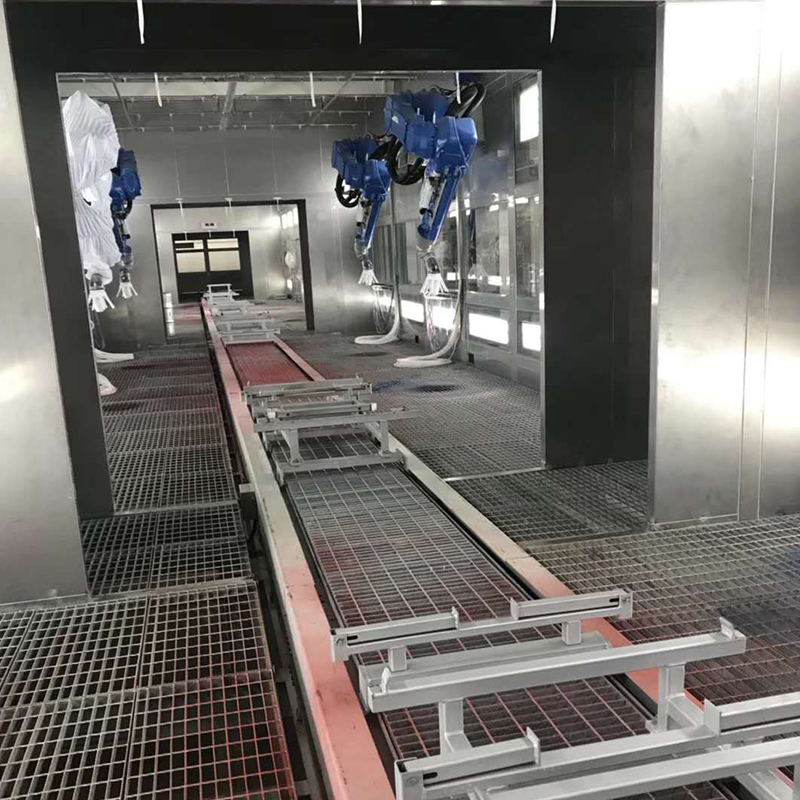
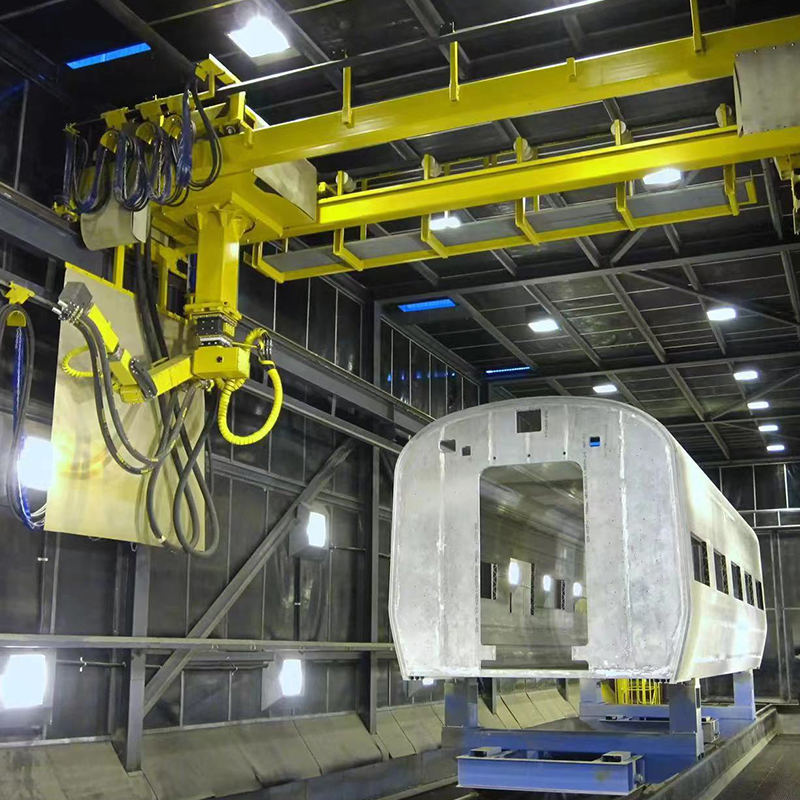
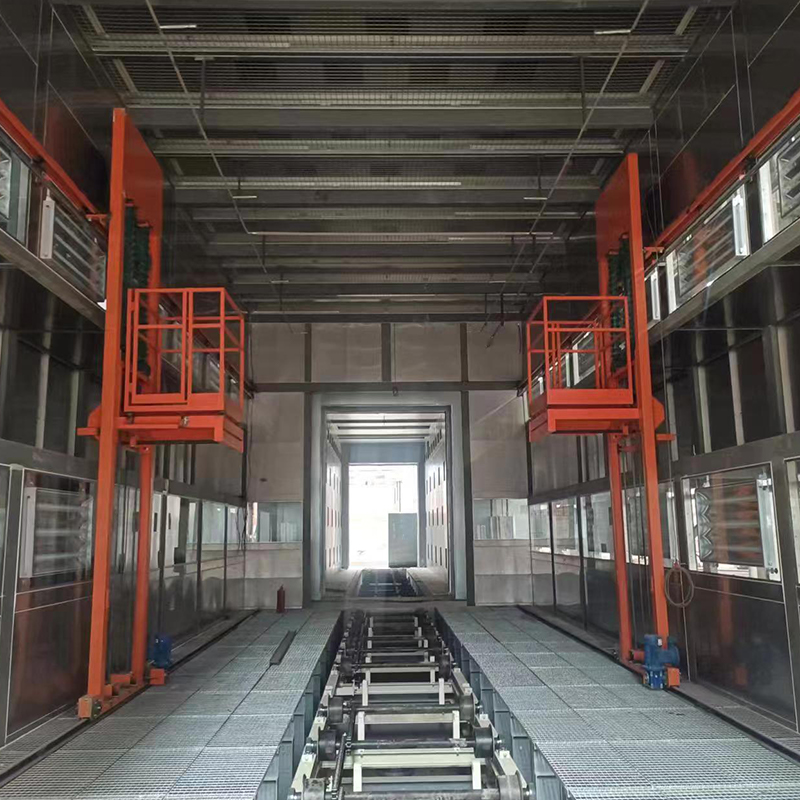
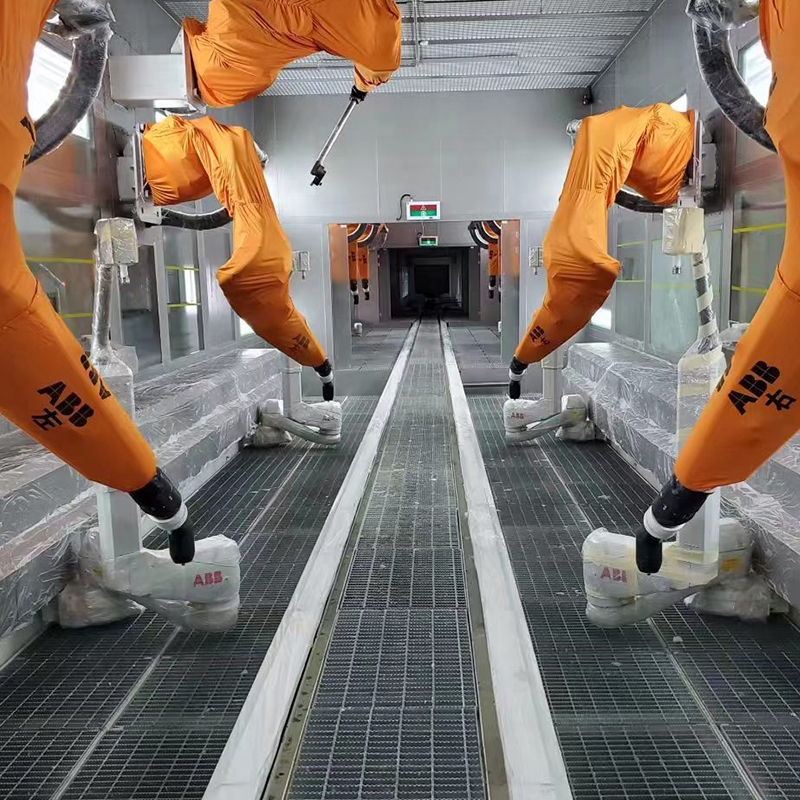
- The tank is mounted on rotating fixtures inside the paint and bake booth for even coverage
- Primer is applied while the tank slowly rotates to maintain a consistent spray distance
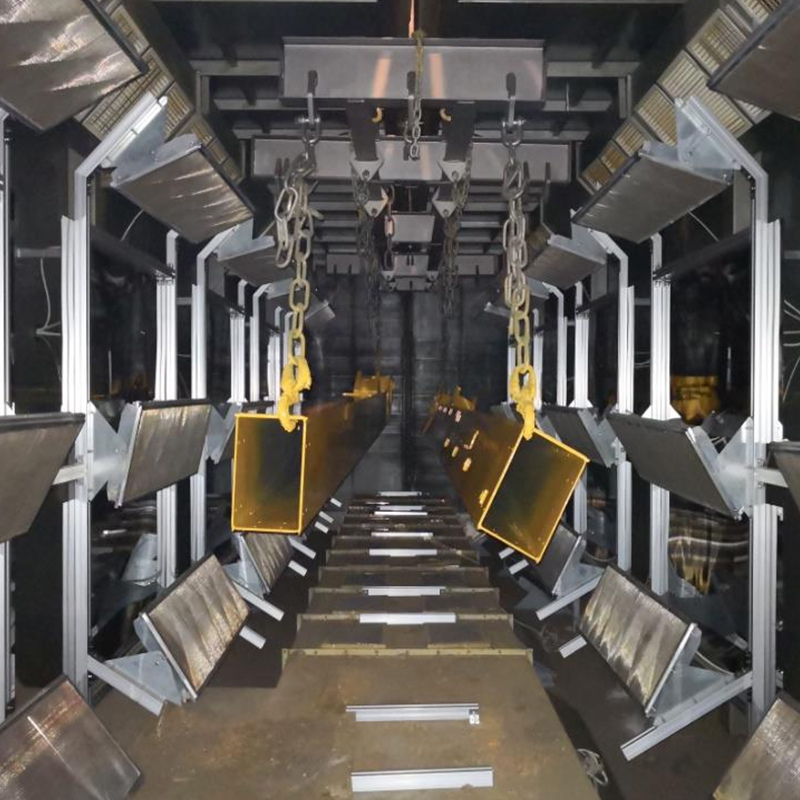
- Infrared radiation drying cures the primer before the top coat is sprayed
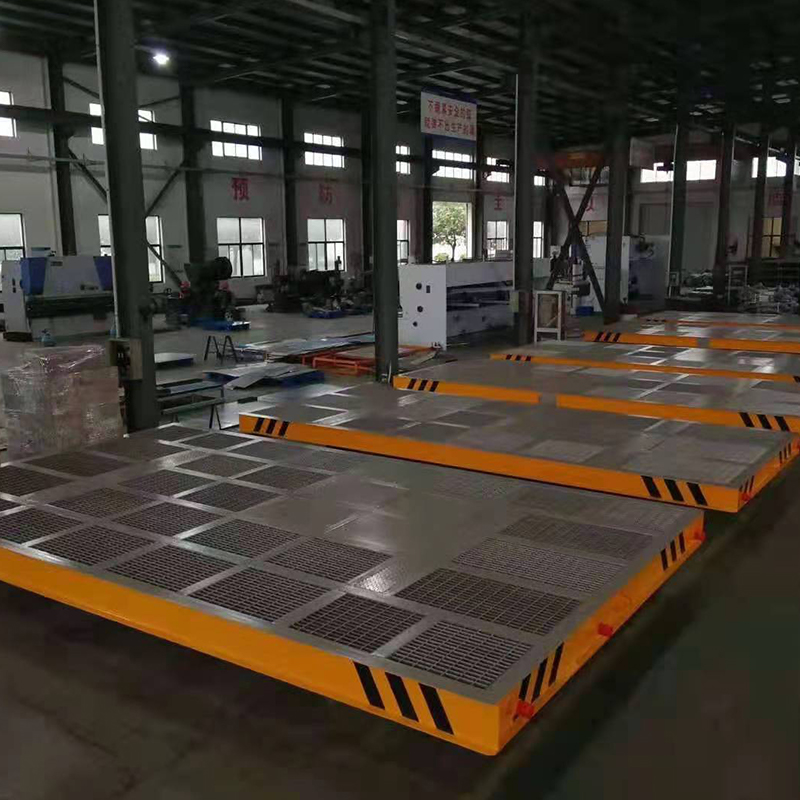
- The finished tank body moves through the automated conveying system to final inspection
Rotating the tank during spraying, rather than moving the spray gun around a fixed tank, helps keep the distance between the nozzle and the surface constant, which reduces the risk of thin spots near the top and pooling near the bottom of the curve.
Interior vs. Exterior Coating Priorities
Grain tank bodies generally need different coating priorities inside and outside the tank.
- Interior surfaces: smooth, corrosion-resistant coating that resists moisture and repeated grain contact
- Exterior surfaces: abrasion- and weather-resistant top coat for long-haul outdoor exposure
- Discharge outlets and hatches: reinforced coating at high-wear contact points
Manufacturing Scale Behind the Equipment
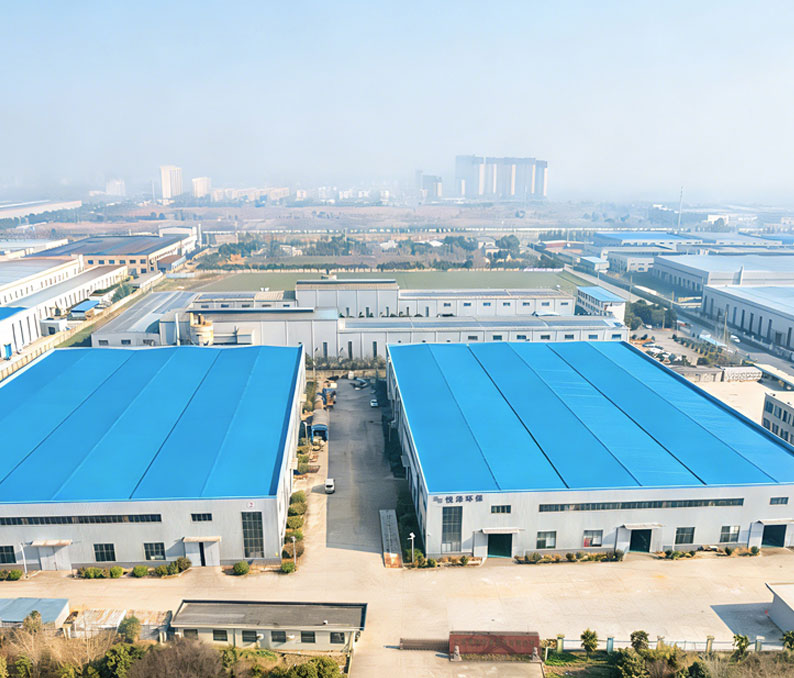
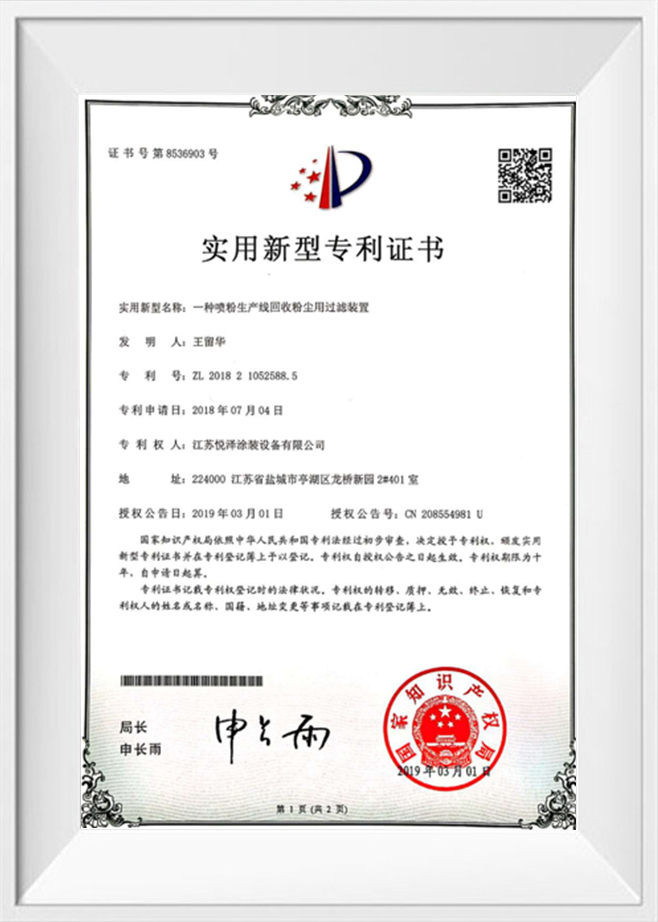
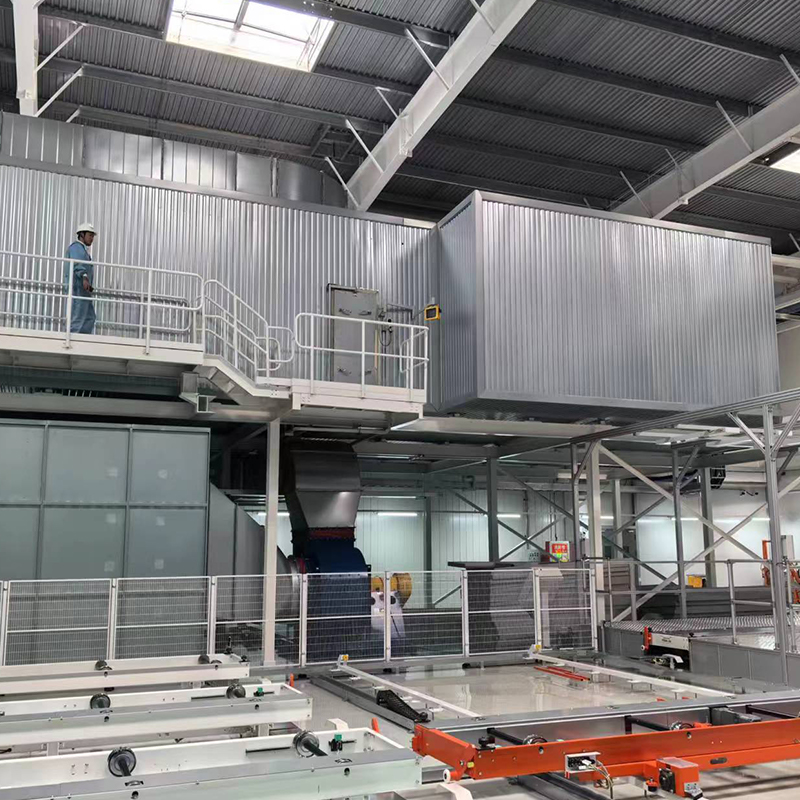
Jiangsu Yue Ze Environmental Protection Equipment Co., Ltd., located in Yancheng, Jiangsu, China, operates a facility spanning 35,000 square meters with a registered capital of 58 million yuan, and reports more than 40 years of combined experience across powder coating lines, paint and bake booths, and large-sized parts grinding rooms. Machines are custom-built to meet challenging machining requirements, with projects completed across multiple provinces and export markets.
Frequently Asked Questions
Q1: Why does a grain tank body need rotating fixtures during painting?
Rotating the tank keeps the spray distance consistent across the entire curved surface, which helps prevent thin spots and pooling that can occur when spraying a fixed cylindrical shape from one side.
Q2: Do the interior and exterior of a grain tank need different coatings?
Yes. The interior typically needs a smooth, corrosion-resistant coating for repeated grain contact, while the exterior needs an abrasion- and weather-resistant top coat for outdoor transport conditions.
Q3: Why do discharge outlets need reinforced coating?
Outlets and hatches experience frequent contact and friction during loading and unloading, so a reinforced coating layer helps the finish hold up longer at these high-wear points.
Q4: What should buyers confirm before ordering a grain tank painting line?
Buyers should confirm the tank's maximum length and diameter, the type of rotating or tilting fixture included, and whether the supplier has completed similar tank-shaped body projects before.


 русский
 عربى
عربى
 Tiếng Việt