
 русский
 عربى
 Tiếng Việt
Widely used in metal workpieces such as hardware, auto parts, engineering machinery, metal furniture, art manhole covers, municipal facilities, and precision components, suitable for mass and standard...
See Details
Yueze Environmental Protection provides one-stop compliant industrial surface treatment solutions with professional tech and fine craftsmanship.
 Get Inquiries
2026-10-16
Content
Powder paint is a dry coating material: resin, pigment, and additives are blended, extruded, cooled, and milled into a fine powder that contains no solvent whatsoever. The powder is sprayed onto a grounded metal part, held in place by electrostatic attraction, then melted and cured in an oven into a hard, continuous film. Nothing evaporates during application, which is why a single coat usually lands between 60 and 120 micrometres, two to four times the thickness of a standard liquid paint coat.
That is the short answer. The practical answer matters more when you are quoting a part or buying a line, because the dry nature of the material drives everything downstream: part hanging, film thickness control, colour change time, and how much material you recover instead of discarding.
Powder paint is a formulated coating, not one single chemical. A typical thermoset powder breaks down roughly like this:
The blend is extruded hot, cooled into a brittle sheet, and ground to 20 to 60 micrometres. Particle size distribution is the detail buyers rarely see but always feel: excess fines reduce transfer efficiency and create dusting, while oversized particles give a rough, orange-peel surface.
The sequence is fixed. Shortening a stage usually shows up as adhesion loss or pinholes within weeks, not years.
Both carry the same name, but they behave differently in the oven, and that difference decides repairability, thickness, and cost per part.
| Property | Thermoset powder | Thermoplastic powder |
|---|---|---|
| Cure mechanism | Chemical cross-linking; cannot be re-melted | Melt and flow only; can be re-melted |
| Film thickness | 60 to 120 micrometres in one coat | 250 to 1000 micrometres, often multi-pass |
| Repair | Difficult; the part is stripped and recoated | Can be locally re-melted |
| Typical materials | Epoxy, polyester, hybrid, polyurethane, fluoropolymer | Nylon, PVC, polyethylene |
| Best fit | Appliances, automotive parts, architectural profiles | Pipe, racking, chemical and thick-wear protection |
Best corrosion and chemical resistance, worst UV stability. Chalking outdoors is expected, so keep it indoors: tanks, cabinets, machine frames, under-hood parts.
The default outdoor powder. Good UV and gloss retention, reasonable mechanical performance, wide colour range.
A compromise for interior goods: smoother flow, lower cost, and better appearance than straight epoxy on furniture and shelving.
Exterior durability with a smoother, thinner-looking finish than polyester, common on wheels and architectural metal.
Architectural-grade resin that holds colour and gloss for decades. It costs several times more than polyester, so it earns its place on facades and high-visibility exteriors.
Powder is not a universal replacement for wet paint. It excels on conductive, heat-tolerant metal parts produced in volume, and struggles elsewhere.
Castings and counterweights are a classic powder application, but they need blasting, sometimes a pre-bake to stop outgassing pinholes, then basecoat and topcoat on a continuous line. That is why dedicated foundry and counterweight coating solutions are built around automated lines rather than manual spraying.
Powder paint contains no solvent, yet a powder line is not emission-free. The booth releases airborne powder that must be captured, cartridge filters and cyclones have to be sized to the gun count, and the cure oven carries off the oils, moisture, and binder residues that boil out of castings and welded fabrications.
Compliance hardware matters as much as the guns: correctly sized dust collection for booth extraction, a final filter stage to protect the exhaust, and where local rules demand it, waste gas treatment on the oven stack. Undersized extraction is the most common cause of a rough finish, because powder that should have been captured settles on the part before cure.
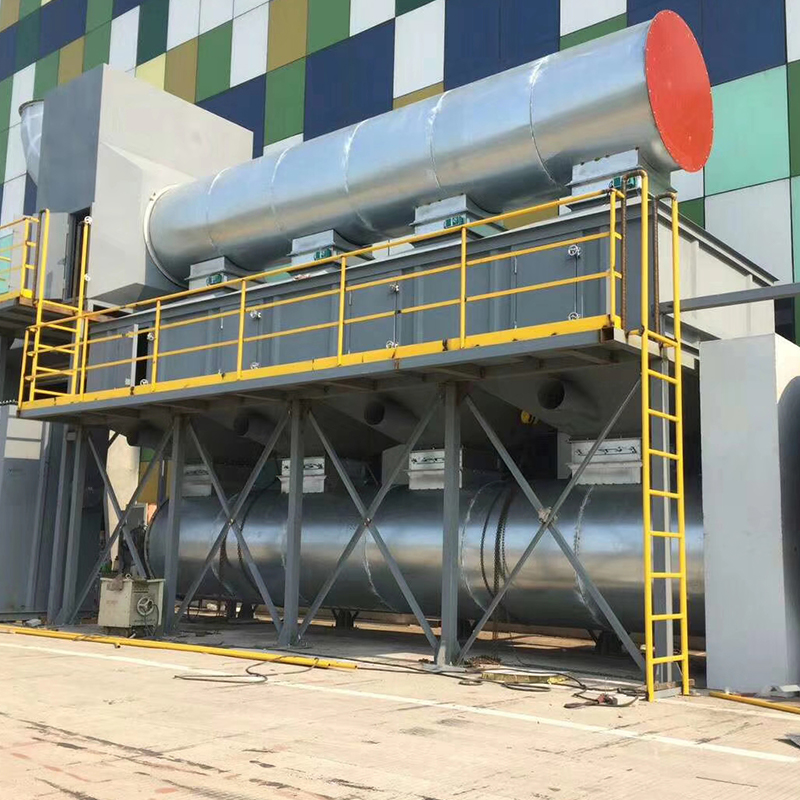 Industrial Waste Gas Treatment for Powder Coating LinesCustom exhaust gas purification system for coating and painting operations, using collection, filtration, fan, controls, and discharge to reduce workshop pollution.View Product →
A powder line is a chain of matched stations, and the weakest station sets the output rate: pre-treatment, a dry-off oven, the powder booth with recovery, reciprocators or robots carrying the guns, the cure oven, cooling, and a conveyor that moves parts through all of them at constant speed. Controls tie the stations together so oven temperature, line speed, and gun settings stay in step.
When you cost a new line or an upgrade, the full equipment list matters more than the headline gun price. It is worth comparing what equipment a coating production line has before you weigh quotations from different suppliers.
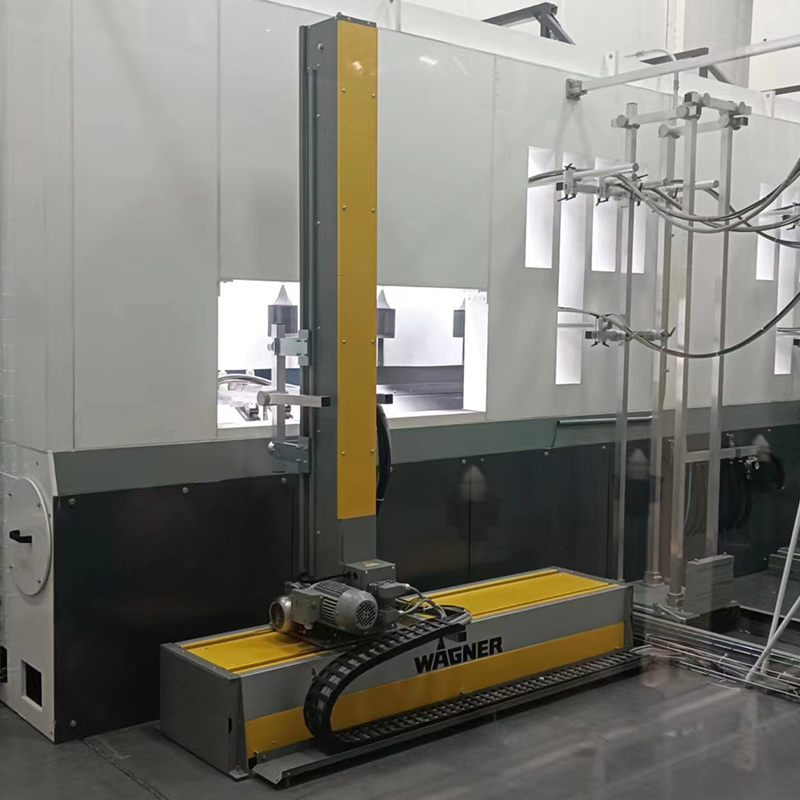 Custom Powder Coating Line for Metal WorkpiecesCustom coating line for mass metal parts, with pretreatment, powder application, curing, and cooling; compare its full equipment list for line upgrades.View Product →
Two operating details decide whether a powder line pays for itself. The first is grounding. Hooks collect cured powder layer by layer, and once contact resistance climbs, transfer efficiency drops and film thickness varies from part to part. Stripping hooks by pyrolysis, a controlled burn in a cleaning booth or furnace, restores contact far faster than manual grinding.
The second is changeover. Moving from a dark to a light colour can cost 20 to 40 minutes of lost production if the booth, hoses, and hoppers were not designed for fast cleaning. Booth design and powder recovery layout determine how much of that time you get back every shift.
 Pyrolysis Furnace and Cleaning Booth for Coating FixturesRemoves old paint and coating residue from racks, hooks, and jigs without chemical stripping, helping restore contact and support fixture reuse.View Product →
Powder paint is a dry, solvent-free coating sprayed electrostatically and cured into a film that is thicker, harder, and more chip-resistant than most liquid finishes. It suits volume metal parts that tolerate a 180 to 200 degrees Celsius cure and can be hung on a conveyor, and it fits poorly with heat-sensitive substrates, ultra-thin films, and jobs that change colour every few pieces.
Judge it as a system rather than a material. Pre-treatment quality, grounding, oven control, and extraction decide the finished result far more than the powder itself does.
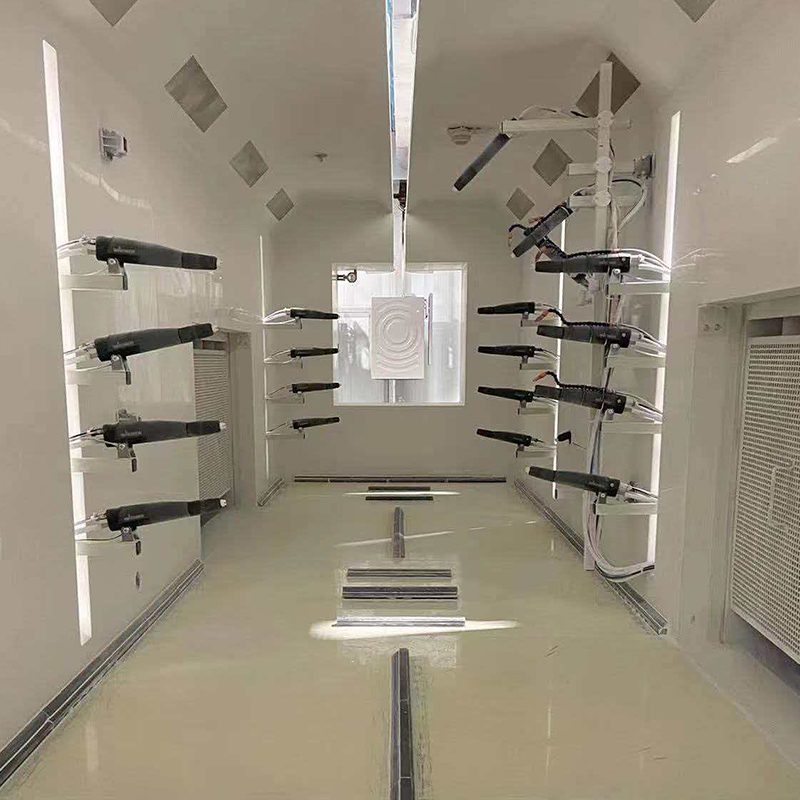
Widely used in metal workpieces such as hardware, auto parts, engineering machinery, metal furniture, art manhole covers, municipal facilities, and precision components, suitable for mass and standard...
See Details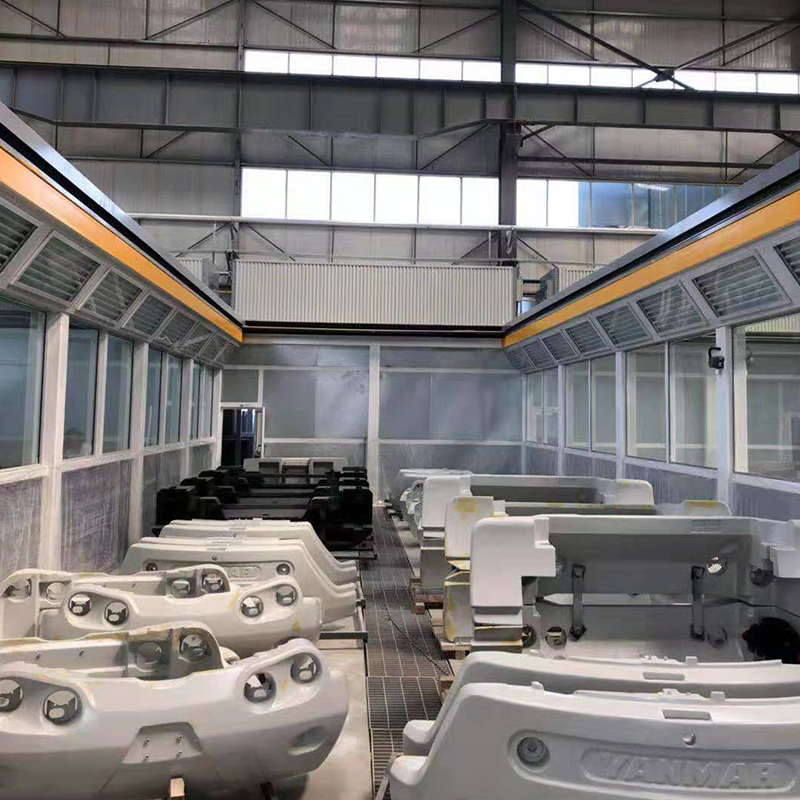
Professional spray coating line specially designed for car wheel manufacturing and refurbishment, applicable to various car wheel types (steel wheel, aluminum alloy wheel, forged wheel, cast wheel, pa...
See Details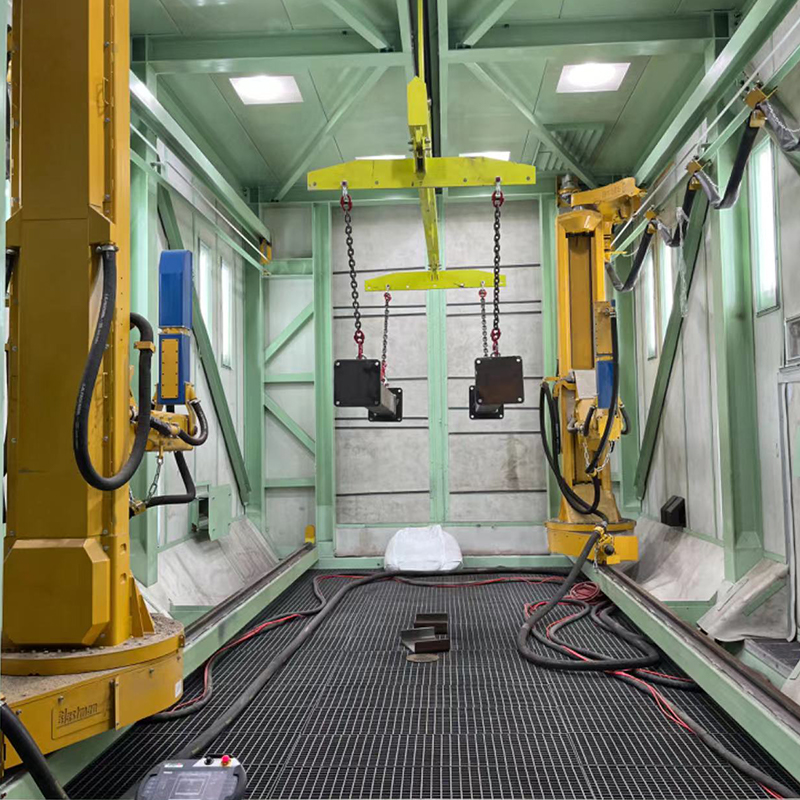
Professional coating line specially designed for large castings and heavy truck parts, applicable to various large castings (engineering castings, mining equipment castings, industrial castings) and h...
See Details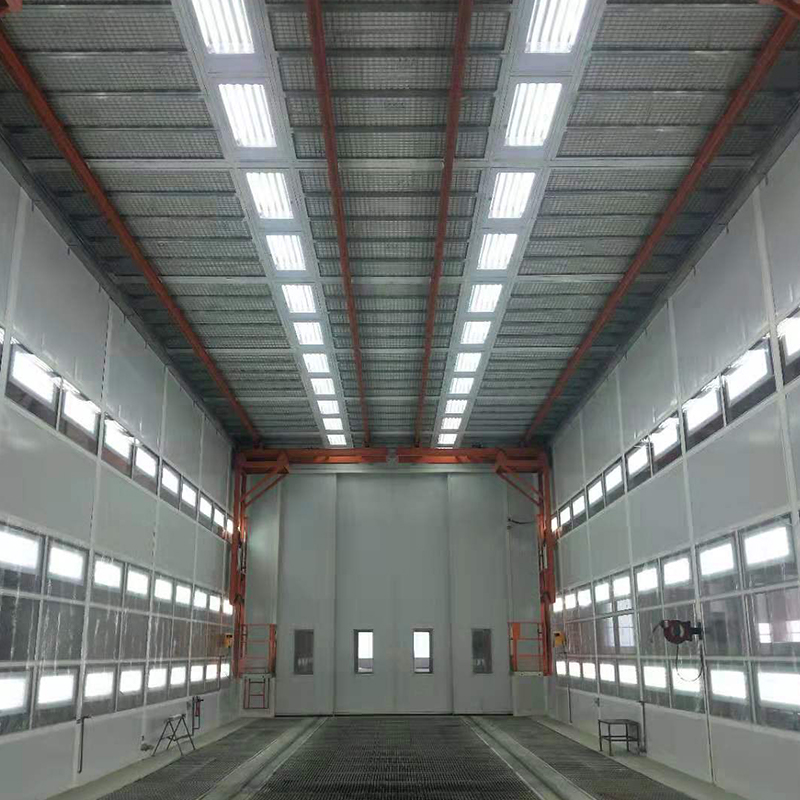
Professional painting line specially designed for grain tank truck body manufacturing and refurbishment, applicable to various grain tank truck types (grain transport tank truck, bulk grain tank truck...
See Details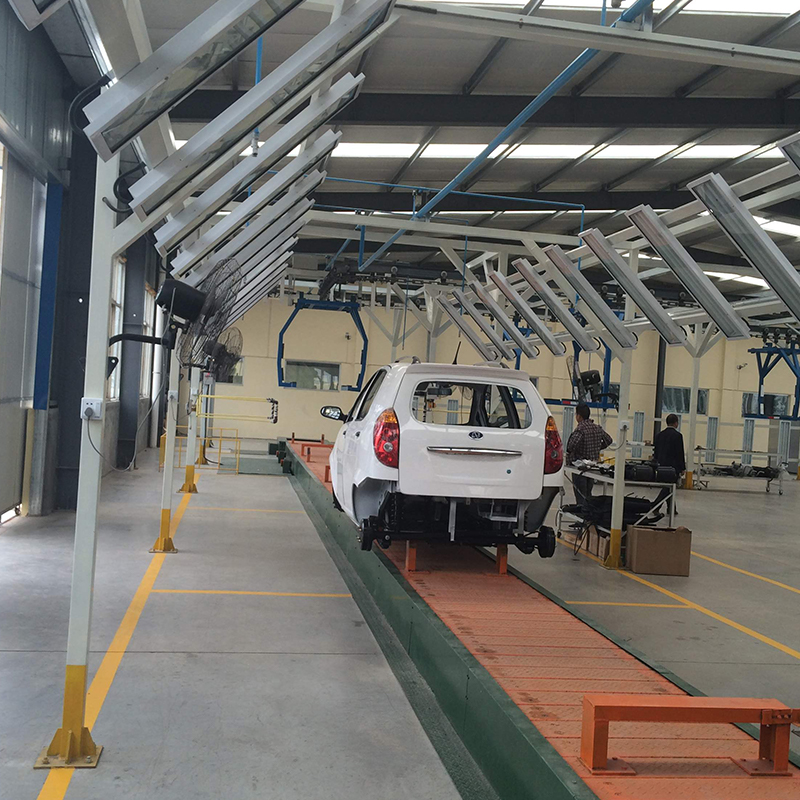
Professional electrophoresis coating line specially designed for electric vehicles (EVs), applicable to various EV types (passenger EV, commercial EV, new energy logistics vehicle) and EV components. ...
See Details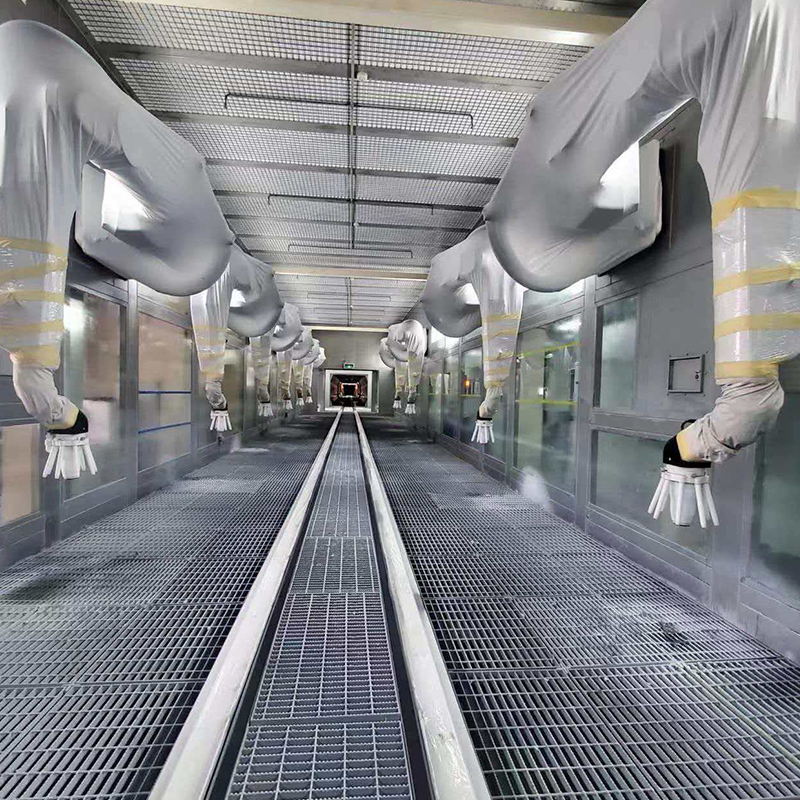
Professional coating line dedicated to truck body manufacturing and refurbishment, applicable to various truck types (heavy-duty truck, light-duty truck, pickup truck, van, commercial truck). Main typ...
See DetailsBuild Your Customized Industrial Coating System
Send us your workpiece information, production capacity, coating process, workshop layout, and environmental requirements. Yueze will help evaluate your project and develop a suitable coating, conveying, drying, and environmental treatment solution.
Main menu
Products
Contact Us
Company Address:
No. 12, Park Avenue, Shanggang Industrial Park, Jianhu, Yancheng City, Jiangsu Province
Message Us Right Now!

Follow us: