
 русский
 عربى
 Tiếng Việt
Professional coating line specially designed for large castings and heavy truck parts, applicable to various large castings (engineering castings, mining equipment castings, industrial castings) and h...
See Details
Yueze Environmental Protection provides one-stop compliant industrial surface treatment solutions with professional tech and fine craftsmanship.
 Get Inquiries
2026-09-25
Content
On the steel floor of an automotive components plant, the decision to move from liquid paint to powder rarely comes from a single dramatic failure. It usually builds up slowly: a clear-coat blister under warranty, an overspray complaint from an OEM auditor, a solvent disposal invoice that keeps climbing. By the time a process engineer starts researching powder coating for automotive, the question is no longer whether to remove the liquid paint loop. The question is how to build a powder line that holds tolerances across thousands of parts per shift without turning maintenance into a second full-time job.
Start with the film itself. A thermoset powder builds to 60 to 100 microns (2.4 to 4.0 mils) of cured film in a single pass, while solvent-borne automotive primers and topcoats typically reach only 25 to 35 microns. The thicker, fully crosslinked film absorbs gravel impact and keeps moisture away from the substrate. On a correctly pretreated suspension bracket, that difference shows up quickly in salt-spray testing: powder-finished parts will often withstand roughly twice the exposure time before red rust appears compared with liquid-painted parts.
The economic case is just as direct. In a typical liquid spray booth, transfer efficiency runs between 40 and 60 percent. Powder systems with cyclone recovery push material utilization above 95 percent because overspray is pulled back into the feed hopper and reused. On a line where the part retains only 60 grams for every 500 grams the gun feeds, that recovery rate saves hundreds of kilograms of coating material every month.
Regulatory pressure completes the argument. Powder emits negligible VOCs, creates no hazardous solvent waste, and unrecovered overspray can usually be treated as non-hazardous solid waste. For plants that renegotiate air permits at every renewal cycle, this simplifies compliance and trims monitoring costs.
| Property | Powder coating | Liquid paint |
|---|---|---|
| Typical film thickness | 60–100 microns | 25–35 microns |
| Material utilization | 95–98% with recovery | 40–60% |
| VOC content as applied | Negligible | 300–600 g/L |
| Edge and recess coverage | Good | Moderate |
| Rework path | Burn off or chemical strip | Sand and repaint |
Not every part belongs on a powder line. Large, flat, Class-A exterior panels such as doors, fenders, and roof skins are still usually painted with liquid systems because powder applied at production speed can leave a slight orange-peel texture on wide surfaces. A long list of underbody, chassis, and battery-electric components, however, is genuinely better suited to powder:
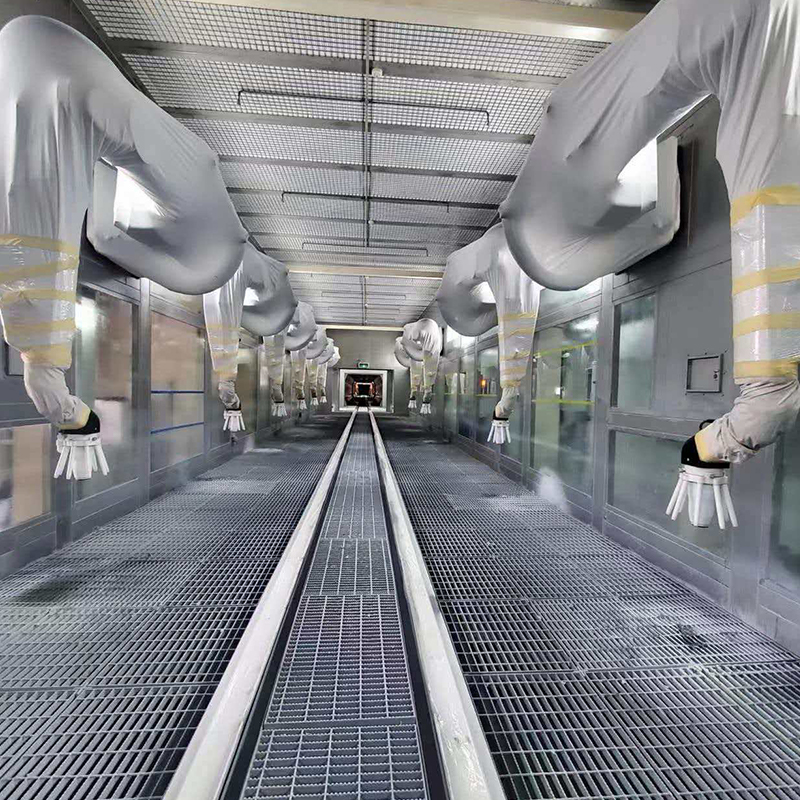 Spray Coating Line For Car WheelProfessional spray coating line specially designed for car wheel manufacturing and refurbishment, applicable to various car wheel types (steel wheel, aluminum alloy wh...View Product →
A production powder line is not a glorified spray booth. It is a coordinated sequence of five stages that must stay in balance at all times:
The line only performs when these stages stay in balance. If the oven has a temperature gradient greater than ±5°C across the part width, thick and thin sections cure at different rates, which creates color variance on visible parts and inconsistent hardness on functional ones. If the conveyor speed drifts, dwell time in the spray booth changes and film thickness becomes uneven. For a component-level breakdown of what sits between the wash tunnel and the cool-down station, see our article on what equipment a coating production line has.
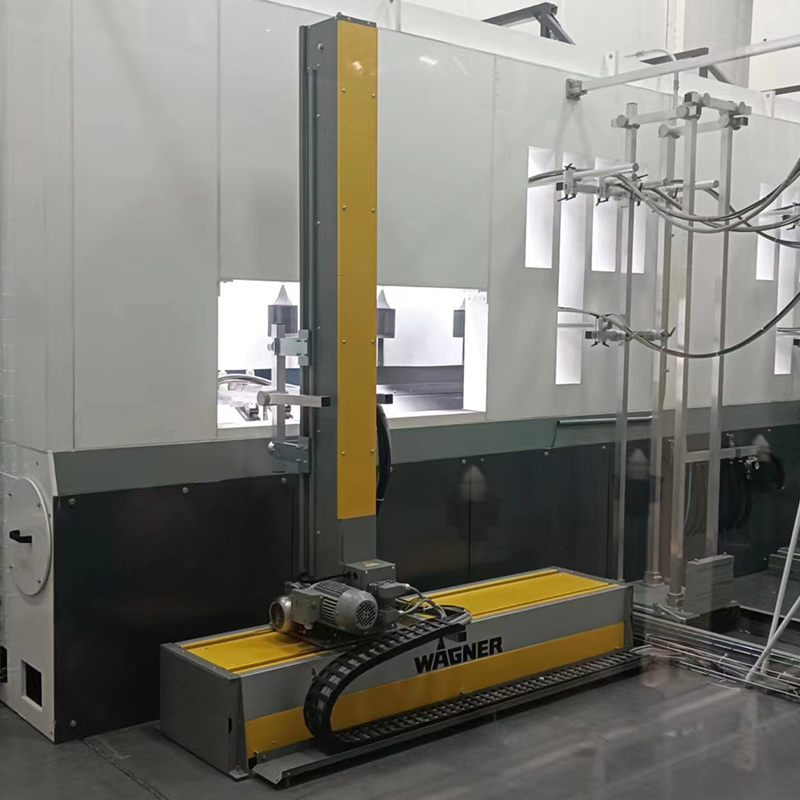 Powder Coating LineWidely used in metal workpieces such as hardware, auto parts, engineering machinery, metal furniture, art manhole covers, municipal facilities, and precision component...View Product →
Buying a powder coating line for automotive use is different from buying a single booth. You are buying a throughput promise: the line must coat X parts per hour, at a defined film thickness, within a defined quality limit, and keep doing it for years. Every specification should be tested against those four numbers.
Many EV component lines also combine a thin e-coat primer for corrosion resistance with a powder top layer for abrasion protection. Manufacturers that need to see how these elements come together for vehicle production can review our automotive and EV manufacturing solutions, which cover the full sequence from pretreatment to final inspection.
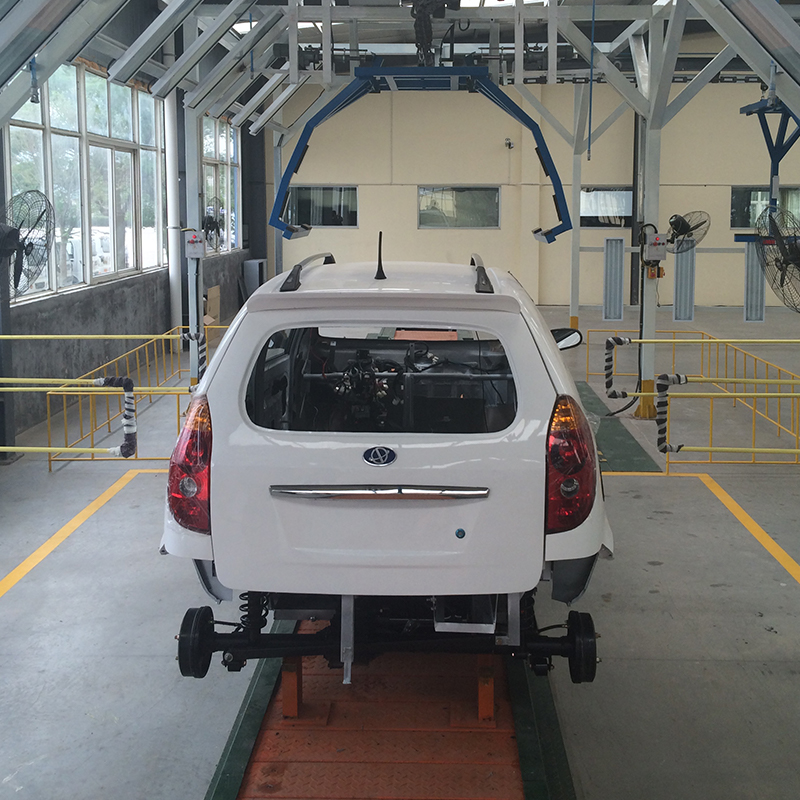 Electrophoresis Coating Line for Electric VehiclesProfessional electrophoresis coating line specially designed for electric vehicles (EVs), applicable to various EV types (passenger EV, commercial EV, new energy logis...View Product →
Once the line is live, quality is decided by measurements, not opinions. The first is film thickness consistency. Use a magnetic thickness gauge (for steel) or an eddy-current gauge (for aluminum) at the same five or six points on several parts per shift, and log the results. A spread of more than 15 microns between high and low readings usually points to gun speed, distance, or airflow problems.
The second is cure completeness. The MEK rub test — wiping the cured surface with methyl ethyl ketone — tells you whether the powder fully crosslinked. Most automotive specs accept 25 to 50 double rubs without the solvent breaking through to the substrate. The pencil hardness test works as a backup: cured thermosets typically measure 2H or harder.
The third is coverage in hard-to-reach areas. Inspect recesses, edges, and threaded holes for bare-metal spots caused by Faraday-cage effects. If recesses look thin, the line needs more airflow or adjusted gun angles to push powder into those cavities.
Aluminum motor housings and cast iron brackets bring a hidden risk: outgassing. When a porous casting heats up in the curing oven, trapped air and mold-release residue expand and burst through the still-melting film, leaving crater-like defects. A pre-bake degassing step or a high-flow powder formulated for porous substrates can prevent most of these rejects.
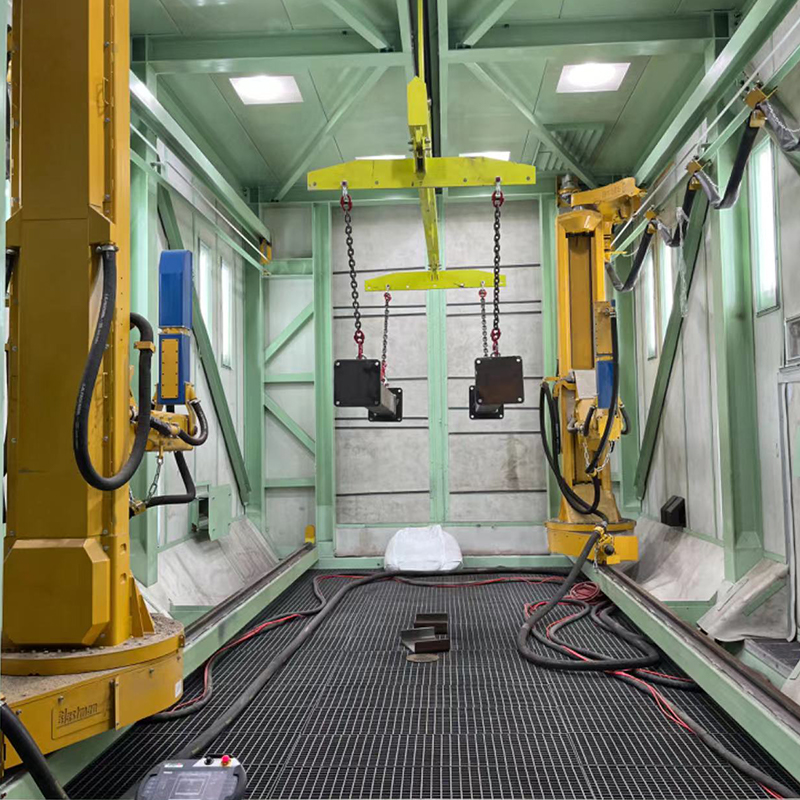
Professional coating line specially designed for large castings and heavy truck parts, applicable to various large castings (engineering castings, mining equipment castings, industrial castings) and h...
See Details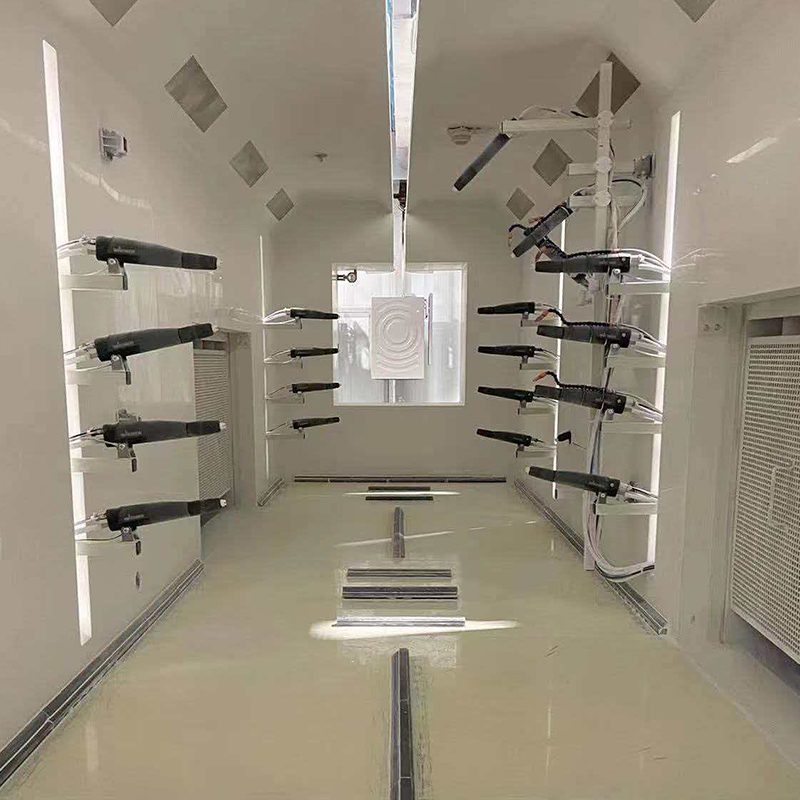
Widely used in metal workpieces such as hardware, auto parts, engineering machinery, metal furniture, art manhole covers, municipal facilities, and precision components, suitable for mass and standard...
See Details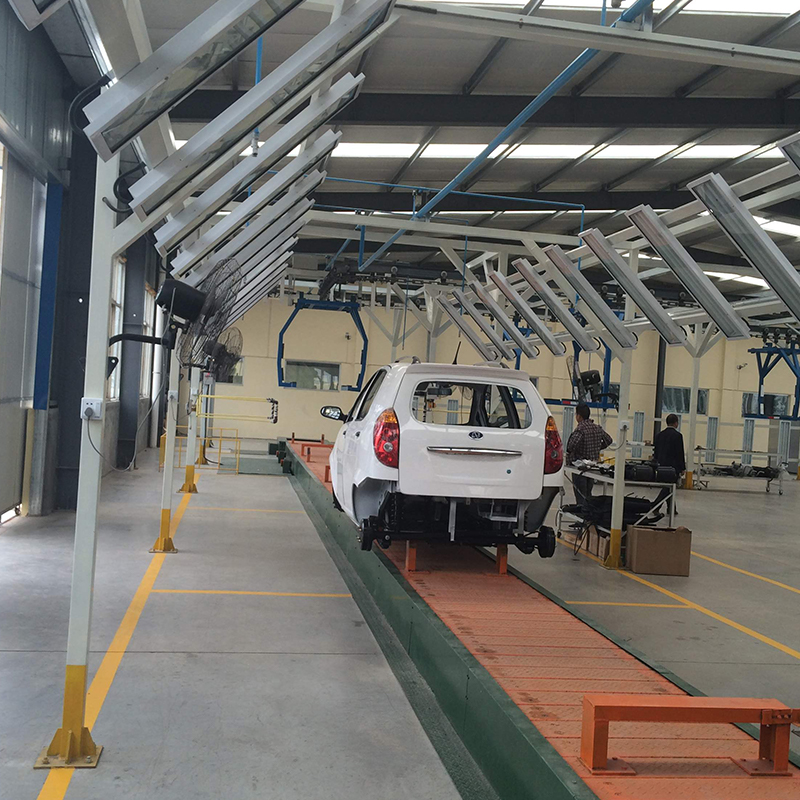
Professional electrophoresis coating line specially designed for electric vehicles (EVs), applicable to various EV types (passenger EV, commercial EV, new energy logistics vehicle) and EV components. ...
See Details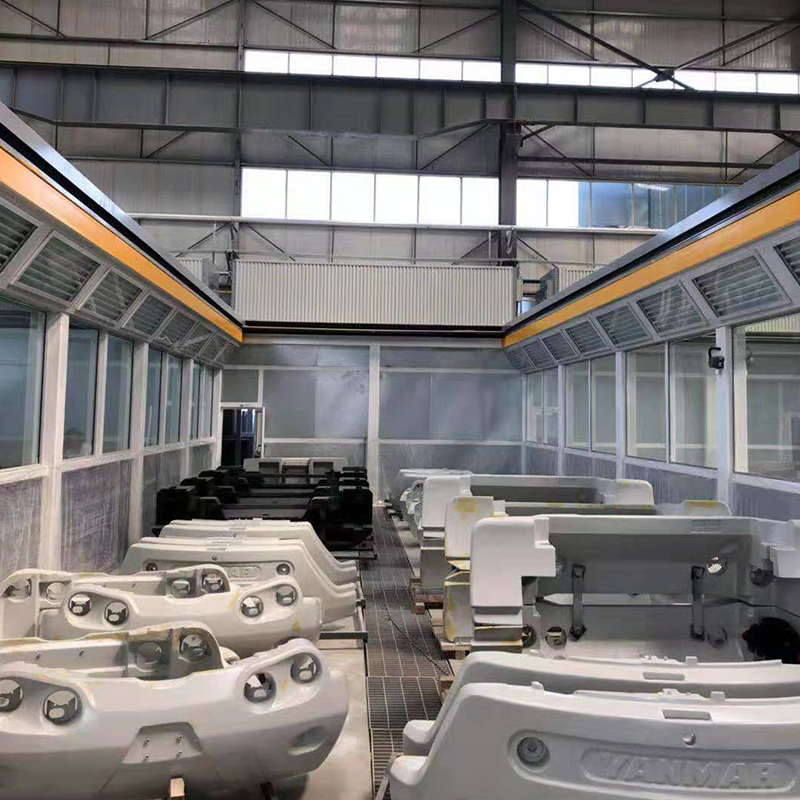
Professional spray coating line specially designed for car wheel manufacturing and refurbishment, applicable to various car wheel types (steel wheel, aluminum alloy wheel, forged wheel, cast wheel, pa...
See Details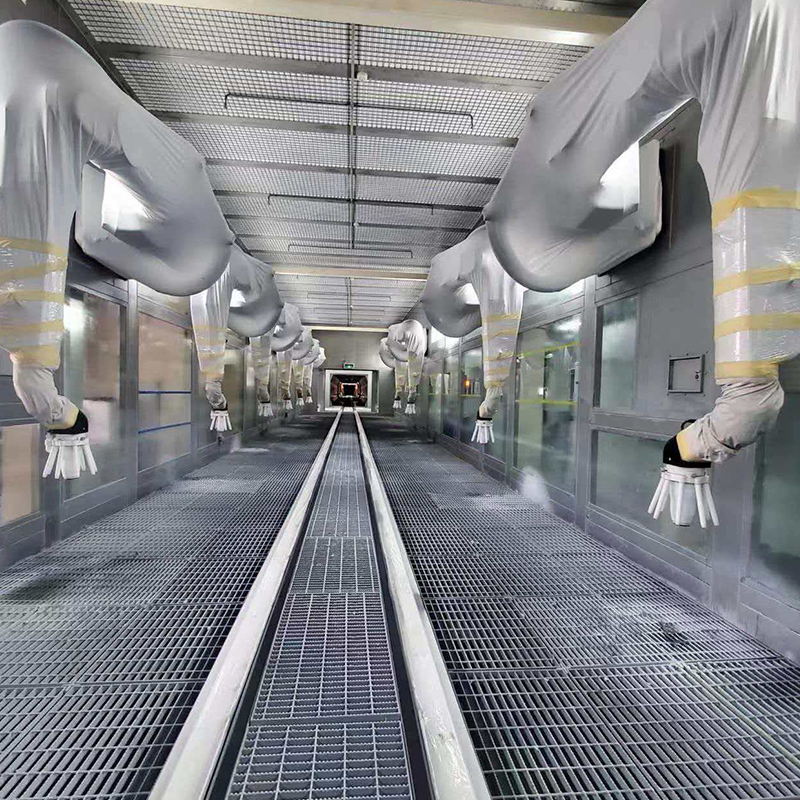
Professional coating line dedicated to truck body manufacturing and refurbishment, applicable to various truck types (heavy-duty truck, light-duty truck, pickup truck, van, commercial truck). Main typ...
See Details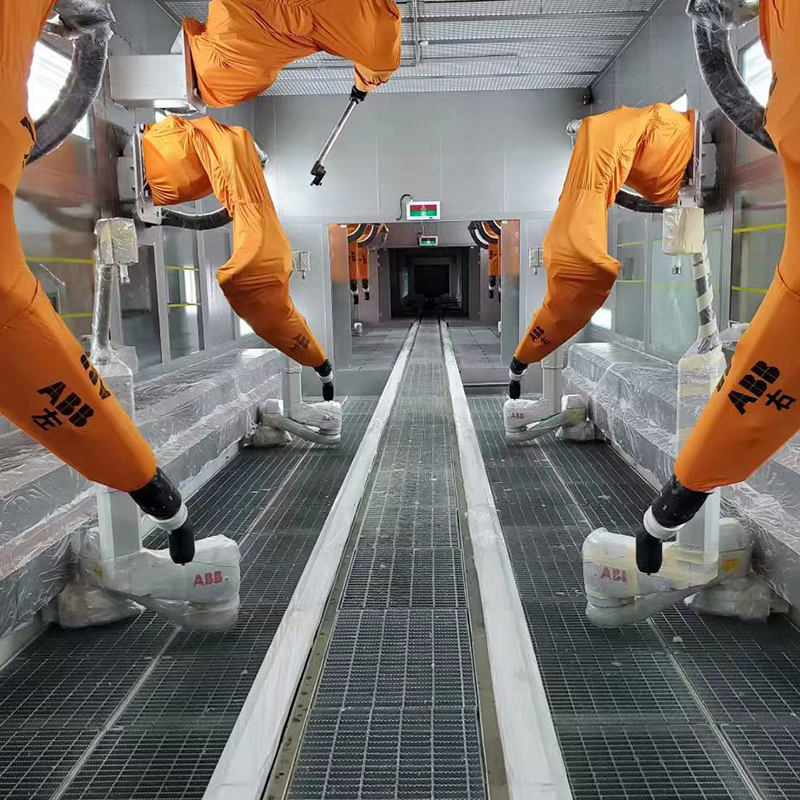
Professional spray coating line specially designed for motor casings, applicable to various motor casing types (electric vehicle motor casing, industrial motor casing, household motor casing, high-tem...
See DetailsBuild Your Customized Industrial Coating System
Send us your workpiece information, production capacity, coating process, workshop layout, and environmental requirements. Yueze will help evaluate your project and develop a suitable coating, conveying, drying, and environmental treatment solution.
Main menu
Products
Contact Us
Company Address:
No. 12, Park Avenue, Shanggang Industrial Park, Jianhu, Yancheng City, Jiangsu Province
Message Us Right Now!

Follow us: