
 русский
 عربى
عربى
 Tiếng Việt
Widely used in metal workpieces such as hardware, auto parts, engineering machinery, metal furniture, art manhole covers, municipal facilities, and precision components, suitable for mass and standard...
See Details
Yueze Environmental Protection provides one-stop compliant industrial surface treatment solutions with professional tech and fine craftsmanship.
 Get Inquiries
2026-09-04
Content
Run your hand along the frame of a well-kept tractor or an outdoor electrical cabinet after years of sun, rain and road salt: the finish is still smooth, thick and stubbornly intact. That durability rarely comes from liquid paint. It comes from powder coating, and the short answer to how it works is this: a finely ground dry powder is given an electrostatic charge, the grounded metal part pulls the charged particles onto its surface and around its edges, and oven heat then melts and chemically bonds that powder into one continuous, hard film. There is no solvent to evaporate, no drips to sag, and the thickness is built in a single pass.
The guide below walks through the chemistry inside the powder, the physics that make it stick, the three stages of the process, how powder compares with liquid paint, and the equipment a complete line needs to do all of this reliably, shift after shift.
Powder coating is not simply paint with the liquid removed; it is a formulation built for a different application method. Before it is ground into powder, the material is a blended melt of four functional ingredient groups:
The blend is extruded, cooled and ground into fine particles, typically measured in tens of micrometers, so it flows like flour yet can be sprayed through a gun almost like a liquid.
Thermoset formulas – polyester, epoxy, epoxy-polyester hybrid, polyurethane – dominate industrial finishing. During baking, resin and curative react into a molecular network that cannot be melted again. That irreversibility is what gives powder-coated parts their resistance to chemicals, heat and impact.
Thermoplastic powders – nylon, PVC, polyethylene – melt and flow without chemical change, so they can be remelted. They are chosen for thick, tough, functional films on products such as dishwasher racks, fencing and pipe fittings.
Whether the booth is operated manually or fully automated, and whether the part is a small bracket or a two-ton casting, every powder coating job moves through the same three stages: prepare the surface, apply charged powder, cure the film.
Powder adheres through direct contact and electrostatic force, so anything left on the metal – machining oil, rust, mill scale, moisture – becomes a weak layer trapped under the finish. Poor preparation rarely shows up at the booth; it shows up months later as peeling, blistering or corrosion creeping under an otherwise perfect-looking film.
Preparation usually combines alkaline degreasing or a phosphate-type conversion wash to remove oils with abrasive or shot blasting to strip rust and scale from castings and weldments. For heavy castings and structural steel, blasting is not optional – it is the step the entire finish depends on.
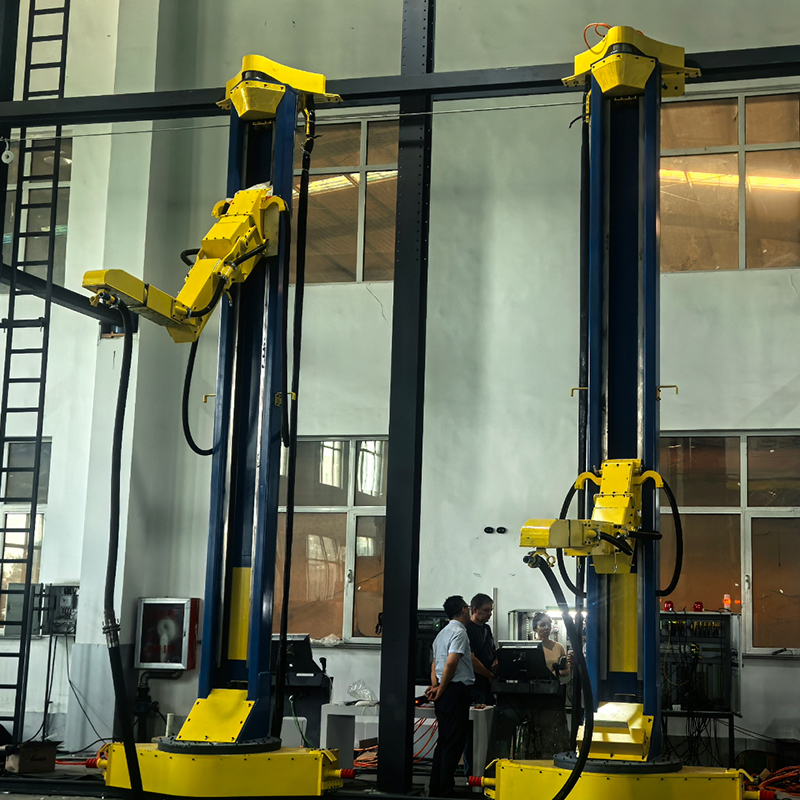 Sanding Room & Automatic Shot Blasting Machine for Surface PreparationBefore powder is sprayed, heavy castings and structural steel need blasting to strip rust, scale, and old coatings so the finish can adhere. This equipment provides enclosed, automated blasting with dust removal, making it a key pretreatment step worth reviewing.View Product →
Inside the booth, powder is drawn from a fluidizing hopper – a container that keeps powder suspended in gently bubbling air so it moves through hoses like a fluid – and delivered to the spray gun. In the most common setup, corona charging, a high-voltage electrode at the gun tip, typically running at tens of kilovolts, ionizes the surrounding air and transfers negative charge to the particles as they leave the gun. The grounded part pulls the charged cloud toward itself, and the particles hold that charge long enough to stay attached through handling and transport to the oven.
Two effects make the method remarkably efficient. Wrap-around means charged particles follow the electric field onto edges, sides and even the back of the part. Self-limiting build means that as the charged layer grows, it starts repelling incoming powder, keeping film thickness reasonably even – commonly about 50 to 100 micrometers (2 to 4 mils) in a single pass, a build liquid paint would need several coats to match.
Two variations matter in production. Tribo guns charge powder by friction rather than high voltage and reach deep recesses where corona fields struggle, while fluidized-bed dipping builds very thick functional coats on parts such as valve bodies.
Application only puts powder on the part; the oven makes it a coating. Most thermoset powders cure once the metal itself reaches roughly 160 to 200 °C (about 320 to 390 °F) and holds that temperature for 10 to 20 minutes, with exact values set by the powder manufacturer's datasheet. As the part heats up, three things happen in sequence:
Cure control has to be measured at the metal, not just in the oven air. An under-cured film turns out chalky and dull and fails chemical testing; an over-baked one yellows and grows brittle. For heat-sensitive substrates such as medium-density fiberboard, low-temperature and UV-curable powders melt gently and harden within seconds under ultraviolet lamps.
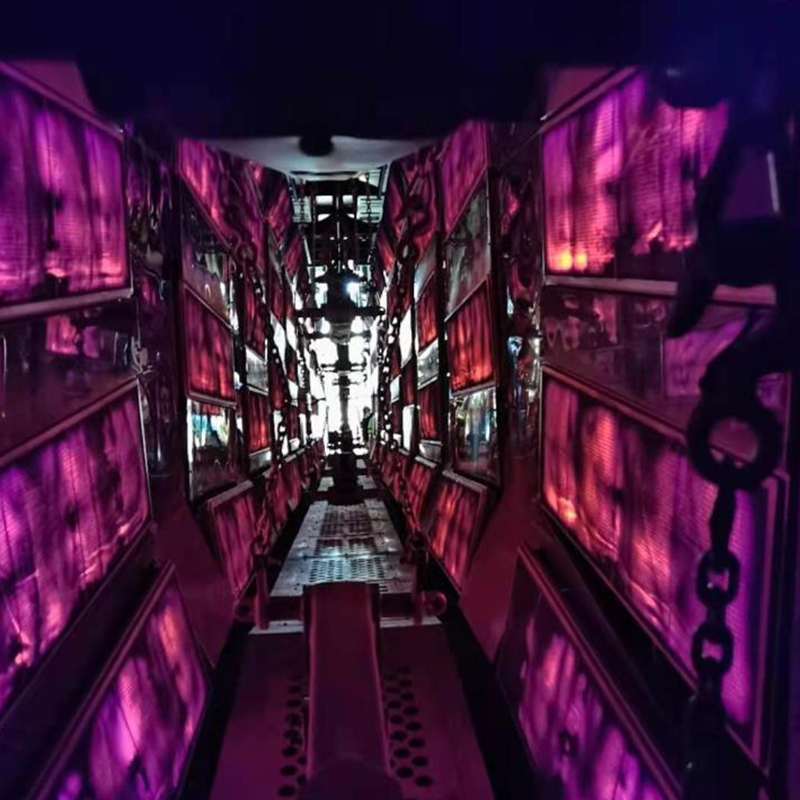 Industrial Drying Room for Powder Curing and DehydrationCure quality determines whether a powder coating film is durable or chalky and brittle. This drying room offers uniform hot air circulation, precise constant temperature control, and customizable heating modes, helping buyers achieve consistent, fully cured finishes.View Product →
The entire process rests on one physical rule: opposite charges attract. In practice, two details decide whether the finish comes out uniform.
The part must be genuinely grounded through clean hooks and hangers. Baked-on powder residue insulates the hook, weakens attraction and produces thin, patchy films along with wasted overspray – which is why disciplined shops burn off or replace hooks on a fixed schedule.
Deep corners, channels and recesses shield themselves from the electric field, so charged powder tends to avoid exactly the areas that need the most protection. Line designers answer with careful gun placement, reciprocating automatic guns, reduced voltage near recesses, or tribo guns on complex geometry.
Powder and liquid paint can both look good on day one; the differences show up in cost, compliance and durability:
| Aspect | Powder Coating | Liquid Paint |
|---|---|---|
| Carrier | Dry powder, solvent-free | Solvent- or water-based |
| VOC emissions | Essentially none | Significant for solvent-borne types |
| Overspray | Collected and reused with a recovery system | Lost; needs filtered exhaust |
| Film per application | Thick single pass, commonly 50–100 µm | Thin; several coats for equal build |
| Hardening | Oven cure, chemical crosslink | Air drying or baking, solvent evaporation |
| Best suited for | Conductive parts that tolerate bake temperatures | Broad range, including heat-sensitive items |
For a factory weighing VOC compliance, material waste and throughput, those rows usually settle the argument in favor of powder.
At production volume, powder coating is less a single machine than a balanced chain of equipment moving at conveyor speed. A complete industrial line typically includes:
Each stage constrains the others: oven dwell time depends on conveyor speed, booth airflow depends on recovery design, and hook layout on the conveyor affects both grounding and film uniformity. Experienced buyers therefore start from the part, the throughput and the finish specification, then work backward to the equipment. For a station-by-station breakdown, see what equipment a coating production line actually includes.
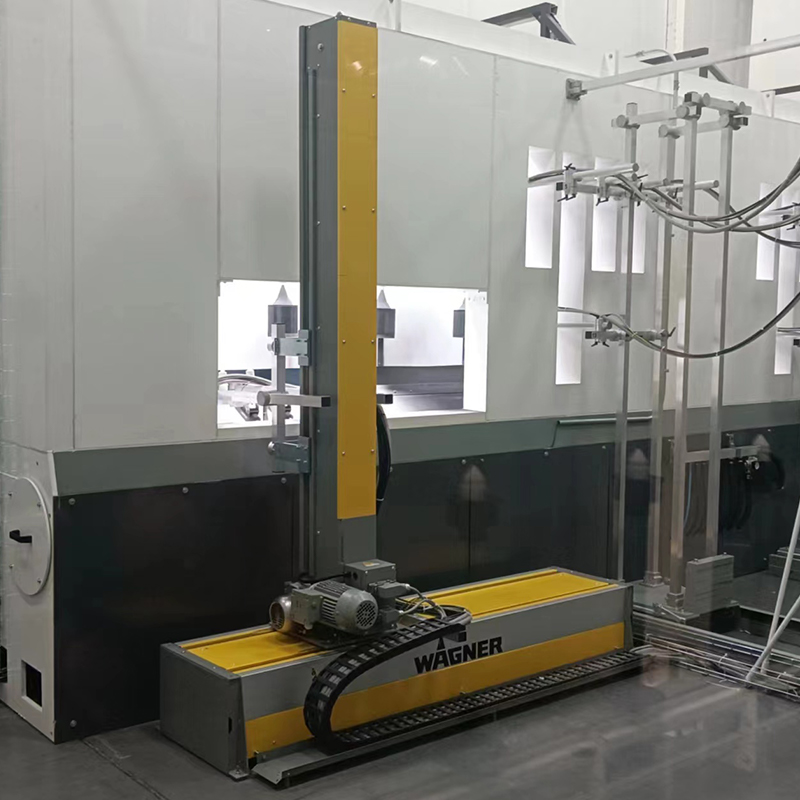 Powder Coating Line for Metal Workpiece FinishingSince oven dwell, booth airflow, and conveyor design all interact, many buyers prefer a complete integrated solution. This automated powder coating line covers application and curing with high powder recycling, zero VOC emissions, and full customization options.View Product →
Any electrically conductive part that tolerates cure temperature is a candidate, and in real factories the list is long:
Porous castings deserve special attention: trapped air and moisture cause outgassing pinholes unless parts are pre-baked or the powder contains degassing additives, and their weight demands robust hanging and conveying. Our foundry and counterweight coating solutions show how blasting, hanging, spraying and curing are engineered around exactly this kind of heavy workpiece.
Most finish defects trace back to one specific, fixable cause:
Powder coating works because it pairs a simple physical principle with a controlled chemical reaction under heat. Preparation, charging and curing each have to be right, because no stage can compensate for another. Holding that balance steady, shift after shift, is what a purpose-built powder coating line is engineered to do – and it is why factories that treat the line as one system, rather than a collection of machines, are the ones whose finishes customers keep coming back to.
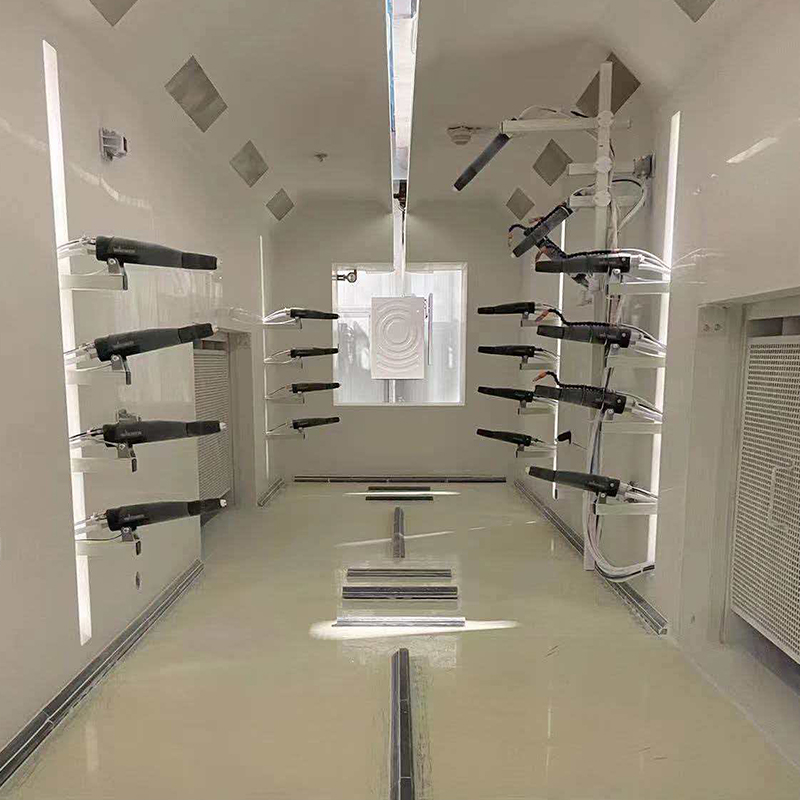
Widely used in metal workpieces such as hardware, auto parts, engineering machinery, metal furniture, art manhole covers, municipal facilities, and precision components, suitable for mass and standard...
See Details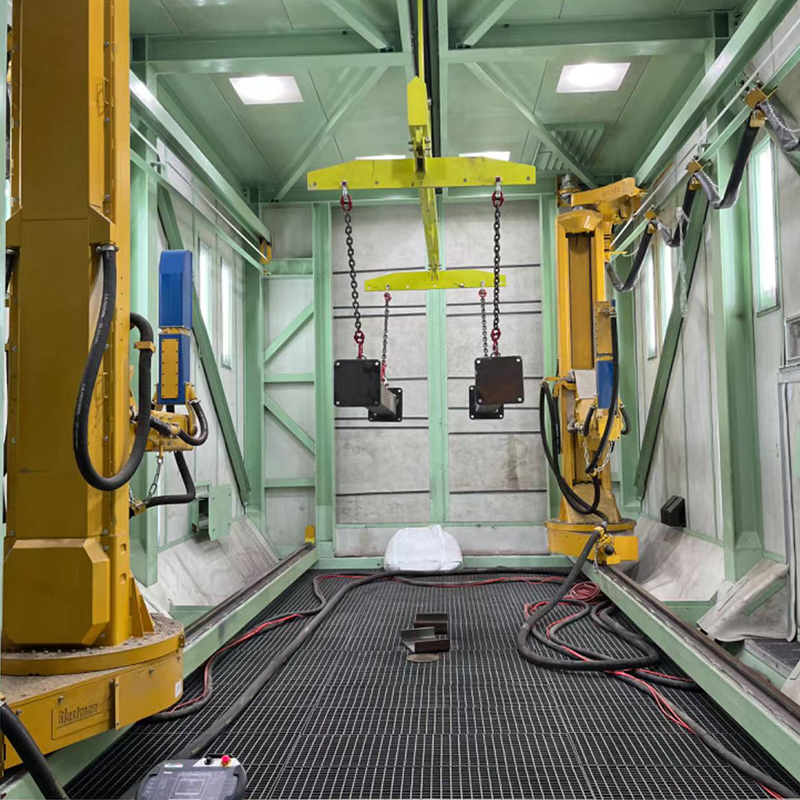
Professional coating line specially designed for large castings and heavy truck parts, applicable to various large castings (engineering castings, mining equipment castings, industrial castings) and h...
See Details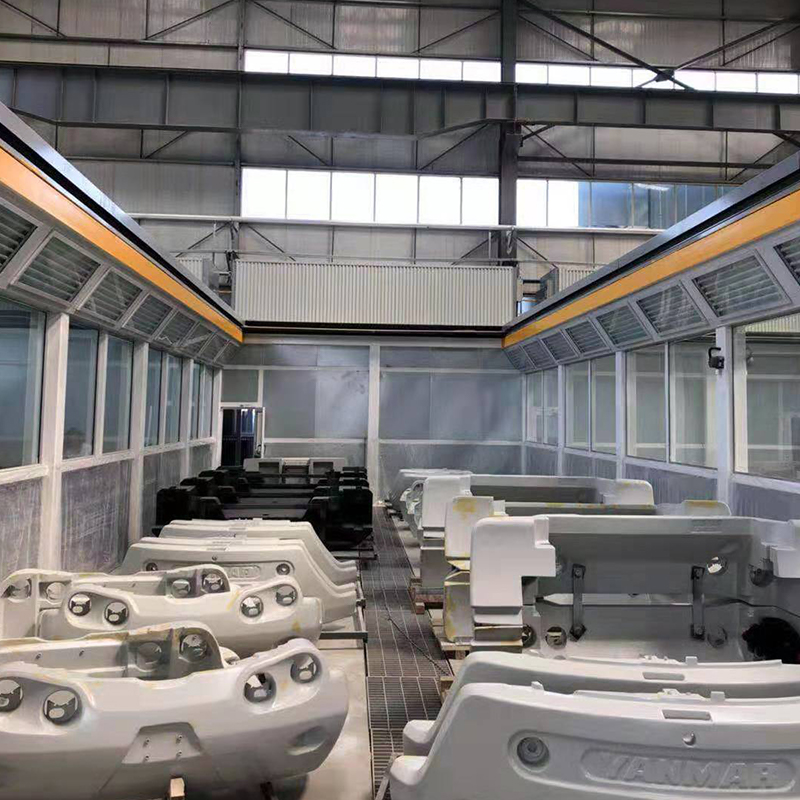
Professional spray coating line specially designed for car wheel manufacturing and refurbishment, applicable to various car wheel types (steel wheel, aluminum alloy wheel, forged wheel, cast wheel, pa...
See Details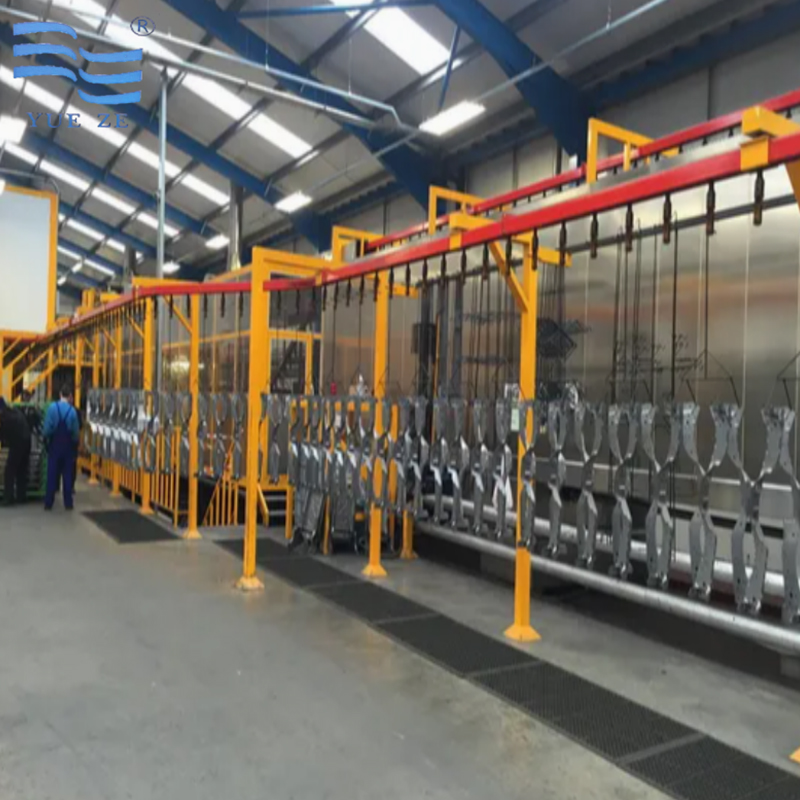
An electrophoretic coating line is a complete automatic surface treatment system. Through electrophoretic deposition, a uniform, dense, and anti-corrosion coating is formed on the metal surface. The w...
See Details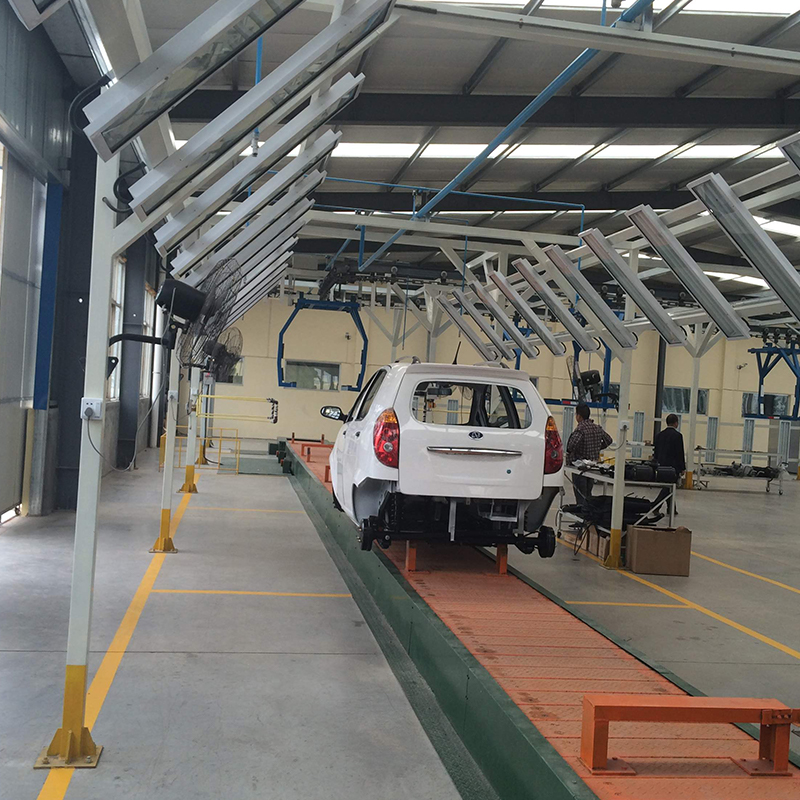
Professional electrophoresis coating line specially designed for electric vehicles (EVs), applicable to various EV types (passenger EV, commercial EV, new energy logistics vehicle) and EV components. ...
See Details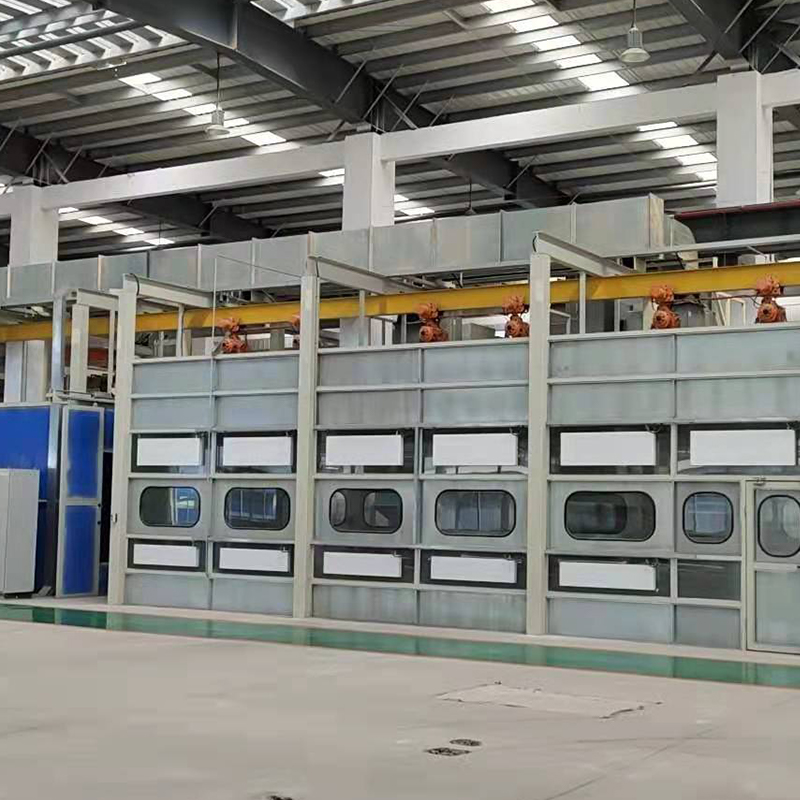
Professional spray coating line designed for engine manufacturing and maintenance, applicable to various engine types (gasoline engine, diesel engine, electric vehicle engine). Main types: engine bloc...
See DetailsBuild Your Customized Industrial Coating System
Send us your workpiece information, production capacity, coating process, workshop layout, and environmental requirements. Yueze will help evaluate your project and develop a suitable coating, conveying, drying, and environmental treatment solution.
Main menu
Products
Contact Us
Company Address:
No. 12, Park Avenue, Shanggang Industrial Park, Jianhu, Yancheng City, Jiangsu Province
Message Us Right Now!

Follow us: