
 русский
 عربى
 Tiếng Việt
Professional coating line specially designed for large castings and heavy truck parts, applicable to various large castings (engineering castings, mining equipment castings, industrial castings) and h...
See Details
Yueze Environmental Protection provides one-stop compliant industrial surface treatment solutions with professional tech and fine craftsmanship.
 Get Inquiries
2026-11-06
Content
A 12 kg cast counterweight comes off the finishing bench with blasting dust still packed into its recesses, and the question on the table is not which coating looks better. It is whether that part runs through a liquid paint booth or an electrostatic powder booth. The practical answer most plants reach: powder wins on film durability, solvent emissions and reclaim economics for high-volume parts that fit inside a cure oven, while liquid paint wins on fast colour changes, heat-sensitive or fully assembled parts, thin appearance films and low-volume variety. Everything past that point is arithmetic on part geometry, total surface area and how many times a shift your line has to change colour.
The two routes differ less in "quality" than in where the cost and the risk sit. Liquid paint is a thin-film, multi-coat, carrier-borne process; powder is a one-coat, 100% solids process that must be melted and crosslinked in an oven. That single difference drives film build, line layout, waste handling, rework policy and how many colour changes your shift can realistically survive.
| Criterion | Liquid Paint | Powder Coating |
|---|---|---|
| Film build per coat | 25–50 µm | 60–100 µm |
| Solids content | 30–60% plus solvent or water | 100%, no carrier |
| Cure requirement | Air dry or 60–180 °C bake | 180–200 °C for 10–20 min |
| Transfer efficiency | 30–60%, higher with HVLP or electrostatic guns | 60–95% with reclaim |
| Colour change | Minutes, same booth | 20–60 min booth clean-down |
| Deep recesses | Reaches inside corners | Faraday cage effect, thin or bare spots |
| Touch-up and rework | Local repair, air dry | Difficult; often strip and recoat |
| Main waste stream | Paint sludge, solvent, VOC | Filter media, occasional reject powder |
A liquid coating carries resin and pigment in solvent or water. The carrier leaves during flash-off and baking, then the resin crosslinks. Because each pass deposits only 25–50 µm, appearance-critical parts usually need a primer, a base coat and sometimes a clear coat, with flash-off between every step. The upside is control: you can build a thin, smooth film, tune gloss and colour quickly, and repair a defect in minutes. The downside is that film quality depends heavily on operator skill, gun distance and booth conditions — too heavy a pass and you get sags, solvent popping or runs.
Powder is applied as dry particles charged at the gun and pulled onto a grounded part. The coated part then enters an oven where the particles melt, flow into a continuous film and crosslink. Two consequences matter in production planning: film thickness is largely set by gun settings and part geometry rather than operator feel, and the part must survive 180–200 °C without distortion, outgassing or damage to seals, bearings and adhesives. Powder also does not hide surface defects — a scratch under an 80 µm film is still a scratch, so pretreatment and blasting discipline carry more weight.
Powder's advantage compounds at volume. One coat of 60–100 µm typically delivers better impact, abrasion and corrosion resistance than a comparable single liquid coat, which is why outdoor furniture, wheel rims, motor housings, shelving and undercarriage parts migrate to powder. There is no solvent to buy, store or abate, overspray can be recovered and blended back into the feed hopper, and the booth itself is simpler to run because there is no flash-off tunnel or VOC abatement to balance.
The economics get stronger on heavy, high-surface-area workpieces that are already going through blasting. A foundry running counterweights, manhole covers or large castings can hang parts on an overhead conveyor, blast, powder coat and cure in one continuous flow, with reclaim keeping material consumption predictable batch after batch — the same logic behind foundry and counterweight coating solutions built around suspension lines.
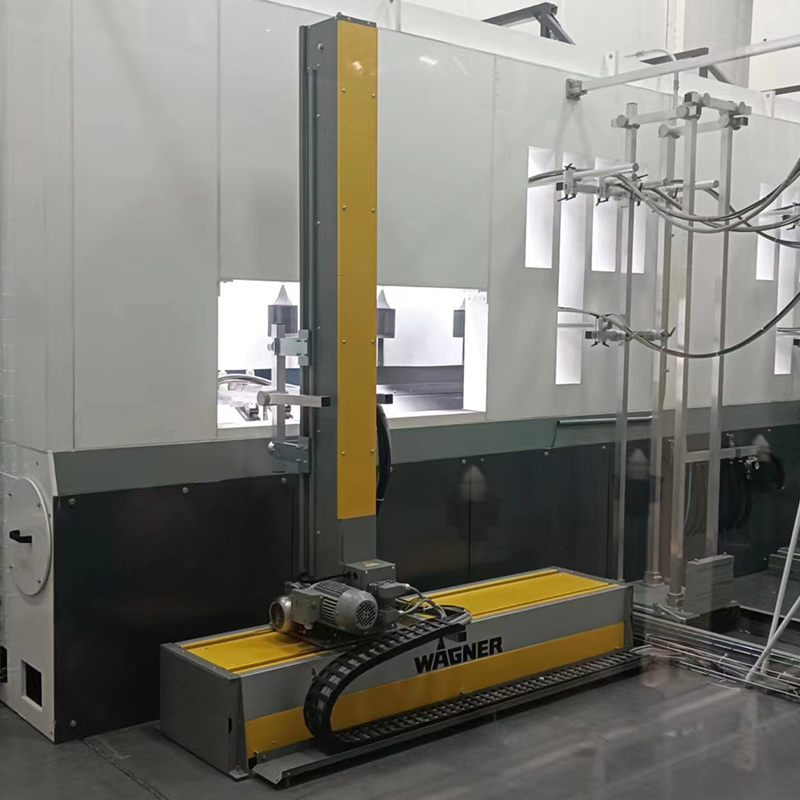 Custom Powder Coating Line for Metal WorkpiecesCustom continuous powder coating line for metal parts, suited to overhead conveyor lines and reclaim-supported, repeatable coating on heavy castings.View Product →
Liquid systems remain the better answer in five recurring situations:
Modern waterborne and high-solids paints have narrowed the old emissions gap considerably, and a well-run liquid booth with proper filtration and airflow can deliver consistent results on parts that powder simply cannot reach.
 Automated Spray Paint Line for Continuous CoatingAutomated spray paint line integrates spraying, drying, curing, and conveying for liquid coatings on parts where powder coverage is difficult.View Product →
Purchase price of the booth is rarely the deciding figure. Run the calculation on these four items and the comparison usually resolves itself:
Pretreatment, conveyor and part hanging logic are largely shared between the two routes; the differences sit around them. A powder line needs a grounded, conductive hanger path, a reclaim-capable booth with cartridge filters, and a cure oven sized for the full film build. A liquid line needs controlled booth airflow, flash-off zones before the bake, and — for solvent-borne materials — abatement. Waterborne paint adds humidity control in the booth, which some plants underestimate at the design stage.
If you are still mapping the process sequence, this breakdown of what equipment a coating production line includes is a useful starting point before you commit to booth dimensions and oven length.
Powder's headline benefit is the absence of solvent, which removes VOC permitting pressure from the coating step entirely — but it introduces a combustible dust hazard. Grounding, bonding, correct duct velocities and rated electrical equipment in the booth are non-negotiable, and dust collection has to be designed for the powder, not adapted from a sanding system. Liquid solvent coatings shift the burden the other way: solvent storage, fire risk and VOC abatement become the engineering focus, and overspray becomes sludge that must be handled as regulated waste.
In practice, most plants end up needing air-side treatment either way, because blasting dust and oven exhaust do not disappear when you change coating type — which is why
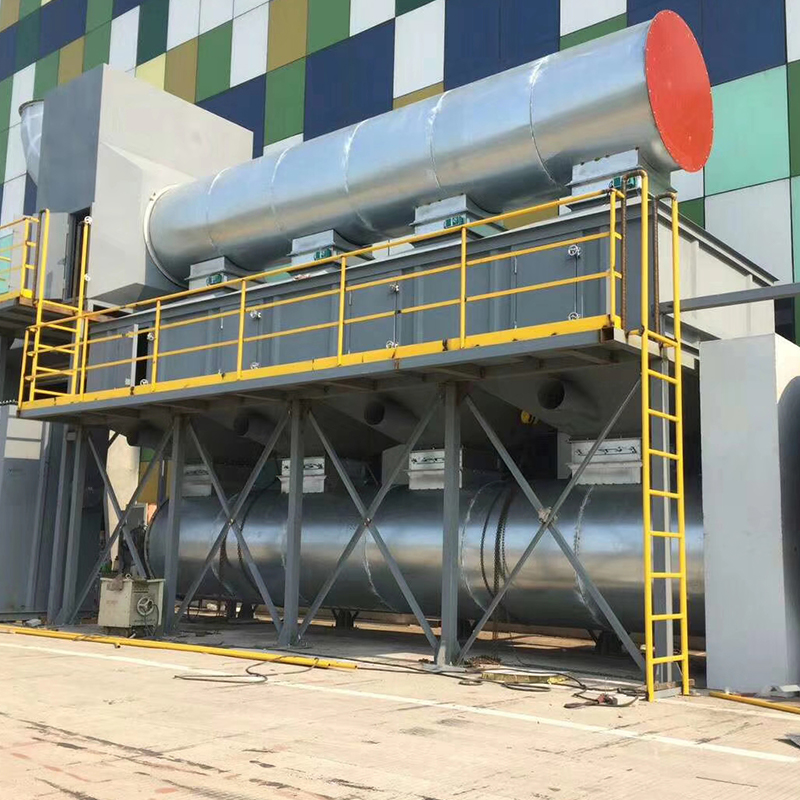 Industrial Waste Gas Treatment for Coating OperationsElectric exhaust treatment system for coating, drying, and surface operations, configurable for airflow, waste gas composition, and available installation space.View Product →
is sized together with the booth rather than added afterwards.
The shortest version of the answer: if your parts are conductive, oven-tolerant and produced in volume with few colour changes, powder coating usually delivers a harder film at a lower cost per square metre. If your parts are heat-sensitive, oversized, appearance-critical or change colour often, liquid paint remains the more honest engineering choice. Decide on geometry, cure tolerance and changeover frequency first — the coating chemistry will follow from there, and the line layout will follow from the chemistry.
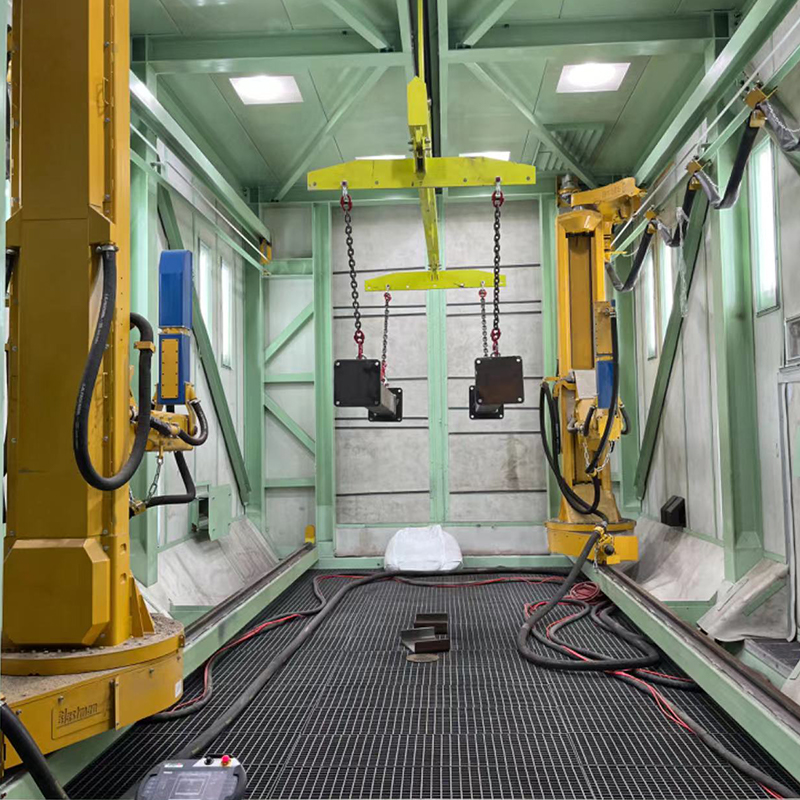
Professional coating line specially designed for large castings and heavy truck parts, applicable to various large castings (engineering castings, mining equipment castings, industrial castings) and h...
See Details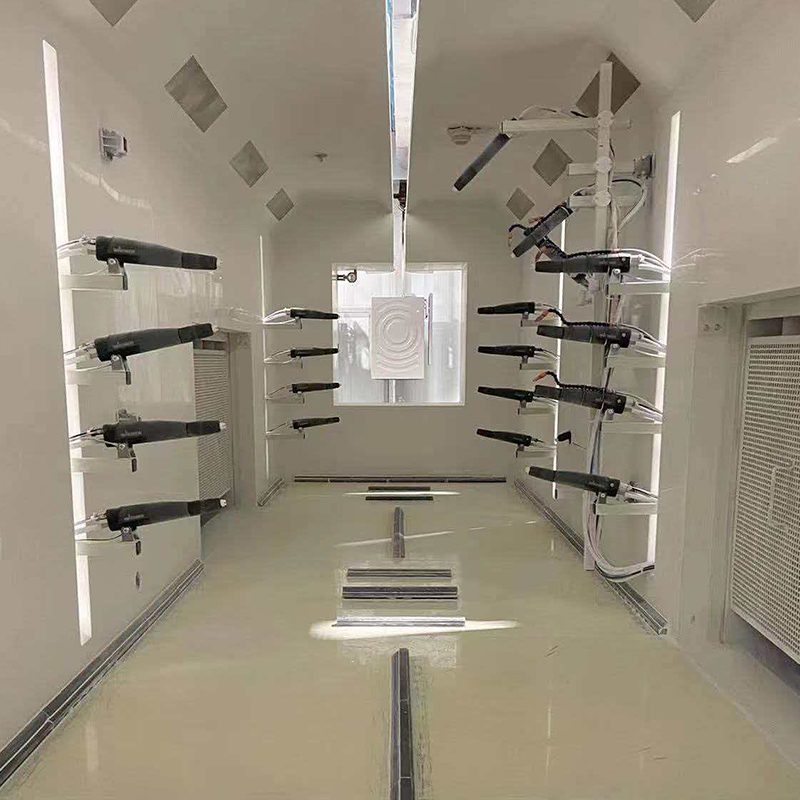
Widely used in metal workpieces such as hardware, auto parts, engineering machinery, metal furniture, art manhole covers, municipal facilities, and precision components, suitable for mass and standard...
See Details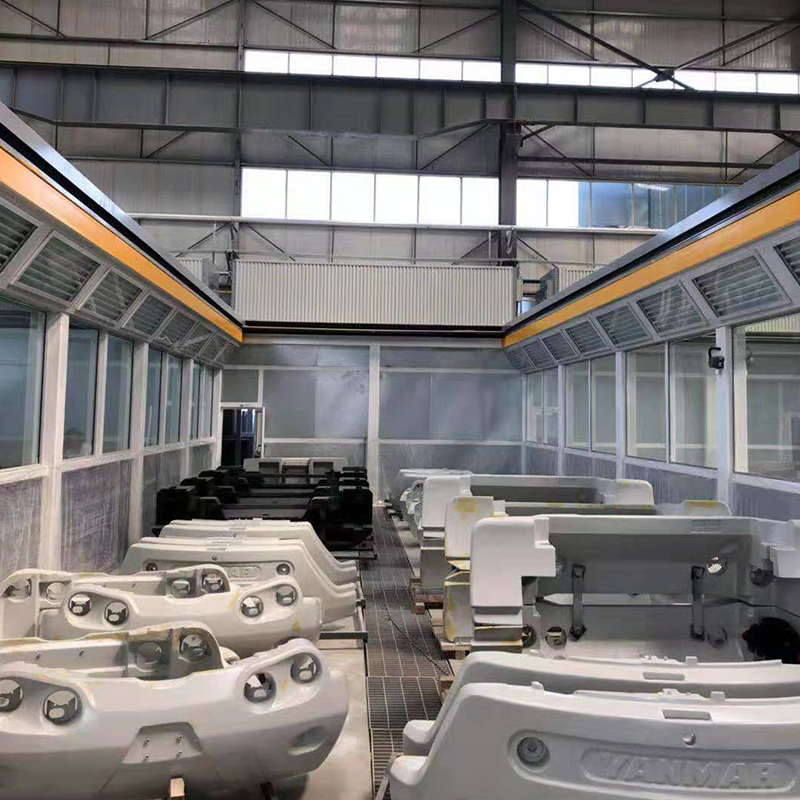
Professional spray coating line specially designed for car wheel manufacturing and refurbishment, applicable to various car wheel types (steel wheel, aluminum alloy wheel, forged wheel, cast wheel, pa...
See Details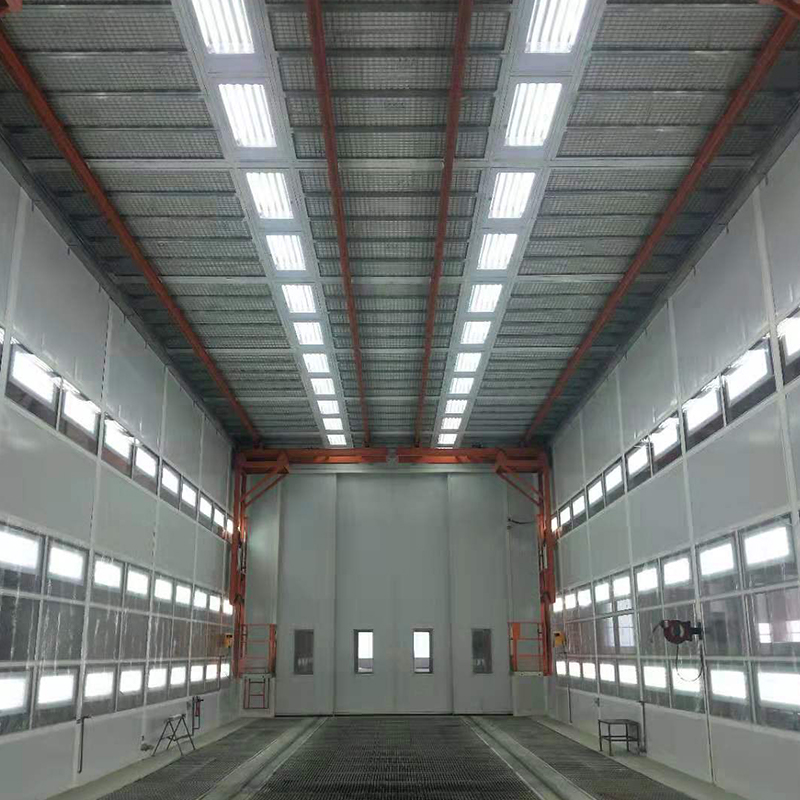
Professional painting line specially designed for grain tank truck body manufacturing and refurbishment, applicable to various grain tank truck types (grain transport tank truck, bulk grain tank truck...
See Details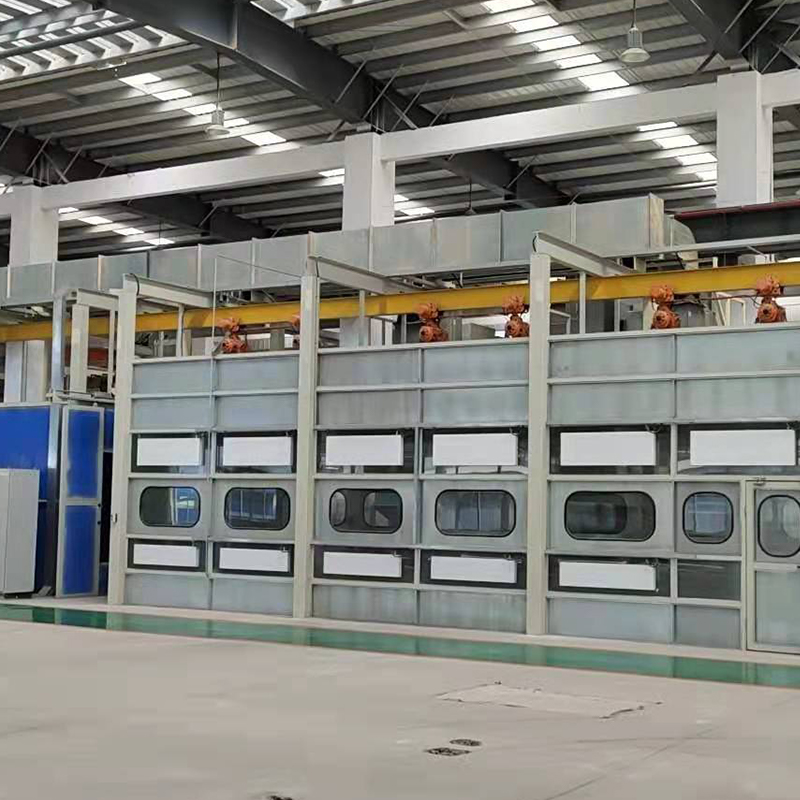
Professional spray coating line designed for engine manufacturing and maintenance, applicable to various engine types (gasoline engine, diesel engine, electric vehicle engine). Main types: engine bloc...
See Details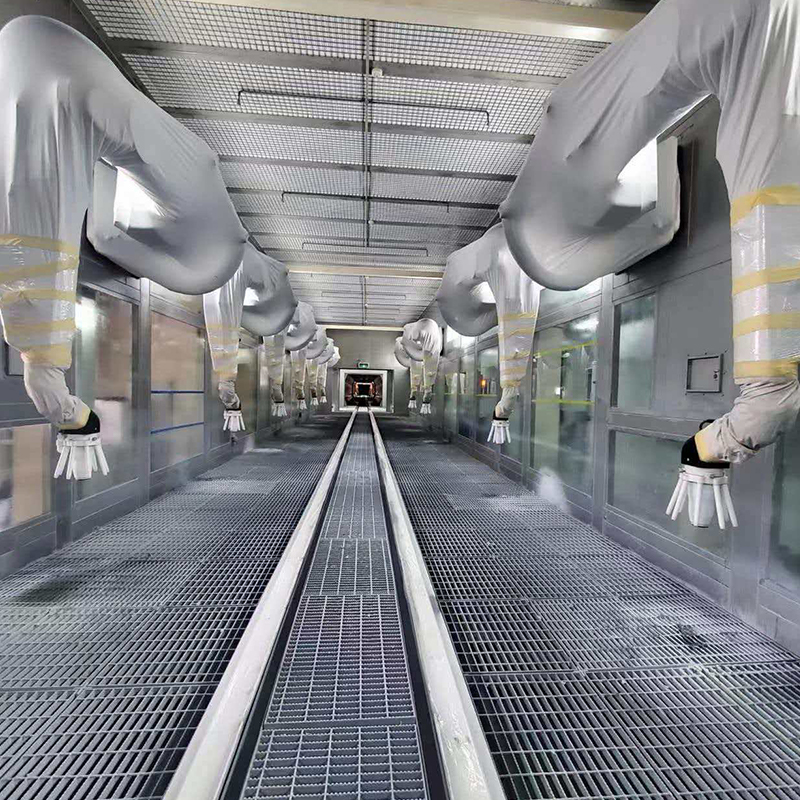
Professional spray coating line specially designed for car wheel manufacturing and refurbishment, applicable to various car wheel types (steel wheel, aluminum alloy wheel, forged wheel, cast wheel, pa...
See DetailsBuild Your Customized Industrial Coating System
Send us your workpiece information, production capacity, coating process, workshop layout, and environmental requirements. Yueze will help evaluate your project and develop a suitable coating, conveying, drying, and environmental treatment solution.
Main menu
Products
Contact Us
Company Address:
No. 12, Park Avenue, Shanggang Industrial Park, Jianhu, Yancheng City, Jiangsu Province
Message Us Right Now!

Follow us: