
 русский
 عربى
 Tiếng Việt
The spray paint line is a complete automated coating system, including spraying, drying, curing, and conveying processes. It features stable operation, uniform spraying effect, and good sealing perfor...
See Details
Yueze Environmental Protection provides one-stop compliant industrial surface treatment solutions with professional tech and fine craftsmanship.
 Get Inquiries
2026-11-13
Content
A finishing shop orders a new paintline spray booth, then discovers during commissioning that the booth’s airflow is too low for the part mix, the filter change-out takes two hours, and the conveyor opening does not match the overhead line. The purchase price looked competitive; the production loss did not. A paintline spray booth is not a commodity box. It is a process component that must match part geometry, coating chemistry, conveyor layout, and local environmental rules. Get that match right at specification stage, and the booth disappears into the line. Get it wrong, and every shift pays for it.
In a paint line, the spray booth controls three things at once: overspray capture, air quality around the operator, and the condition of the air reaching the wet film. A booth that captures overspray but delivers turbulent air at the gun will produce uneven finishes, dry spray, or solvent popping. A booth that delivers clean air but cannot handle filter loading will choke on a heavy production shift.
The first decision is booth type. Manual spray booths suit low-volume or mixed-part production. Automatic robotic spray booths are better when the part family is stable and the line runs at a steady takt. Heavy-vehicle spray booths are sized around large envelopes, while retractable mobile booths give flexibility where floor space is shared. The right choice depends on the part envelope, the number of color changes, and whether the booth sits inside a continuous conveyor loop.
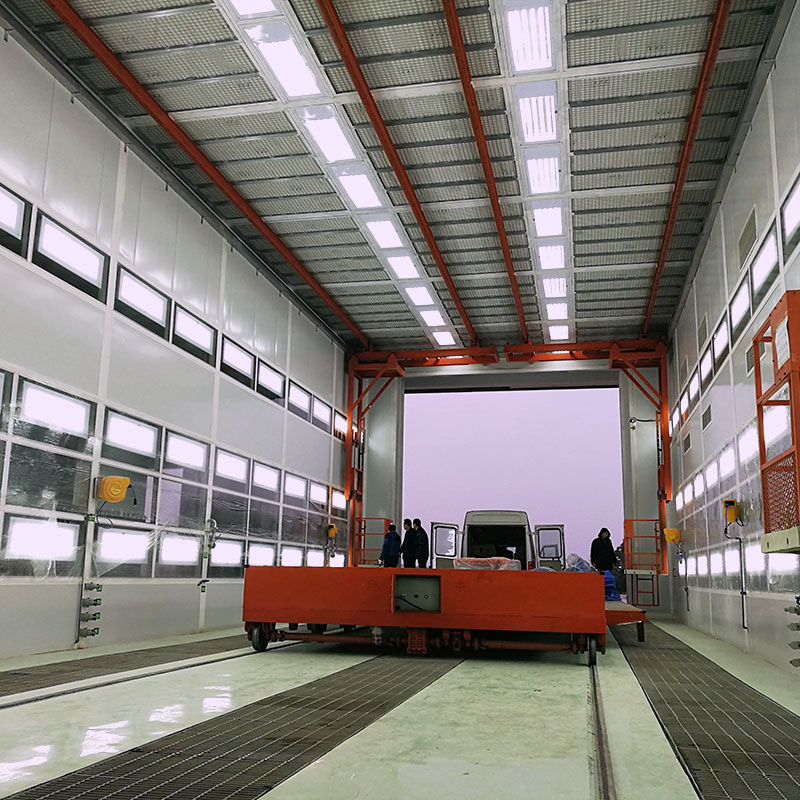 Automatic Robotic Spray Booth for Continuous CoatingUnmanned robotic spray booth with programmable paths, constant-temperature airflow, and high-efficiency filtration for stable, high-volume coating lines.View Product →
For automotive and EV manufacturing, booth design also has to support primer, basecoat, and clearcoat stages without cross-contamination. That usually means separate air-handling zones, staged filtration, and a conveyor path that keeps parts out of the booth’s dead zones. The booth is therefore part of the paint line architecture, not a standalone purchase. For a broader view of how equipment fits together, see what equipment a coating production line includes.
Airflow is the most mis-specified variable. A booth that is too small for the part can pass a smoke test and still fail in production because the operator’s body blocks the downdraft. A booth that is oversized wastes make-up air and energy. The practical starting point is the part envelope plus the gun-to-part working distance, not the booth footprint alone.
Filtration strategy matters just as much. Dry-type booths using cardboard paint arrestor boxes and filter cotton rolls are common where water treatment is not available or where quick filter change-out is a priority. Higher-efficiency filter media capture finer particulate but cost more and load faster. The right balance depends on coating type, overspray volume, and how often the booth is cleaned. For large castings or truck parts, a heavy-vehicle booth with robust filter access can reduce downtime more than a lower-cost booth with tight service clearances.
| Booth type | Best fit | Airflow focus | Integration note |
|---|---|---|---|
| Manual | Mixed parts, low volume | Operator breathing zone and downdraft balance | Simple conveyor opening; easy filter access |
| Automatic robotic | Stable part family, steady takt | Uniform crossdraft or downdraft for repeatable film build | Robot envelope, gun clearance, and conveyor indexing |
| Heavy-vehicle | Large castings, truck bodies, bus parts | High-volume air handling with even distribution | Reinforced floor, large drive-through openings, maintenance access |
| Retractable mobile | Shared floor space, intermittent work | Local exhaust and quick setup | Best kept outside continuous conveyor loops |
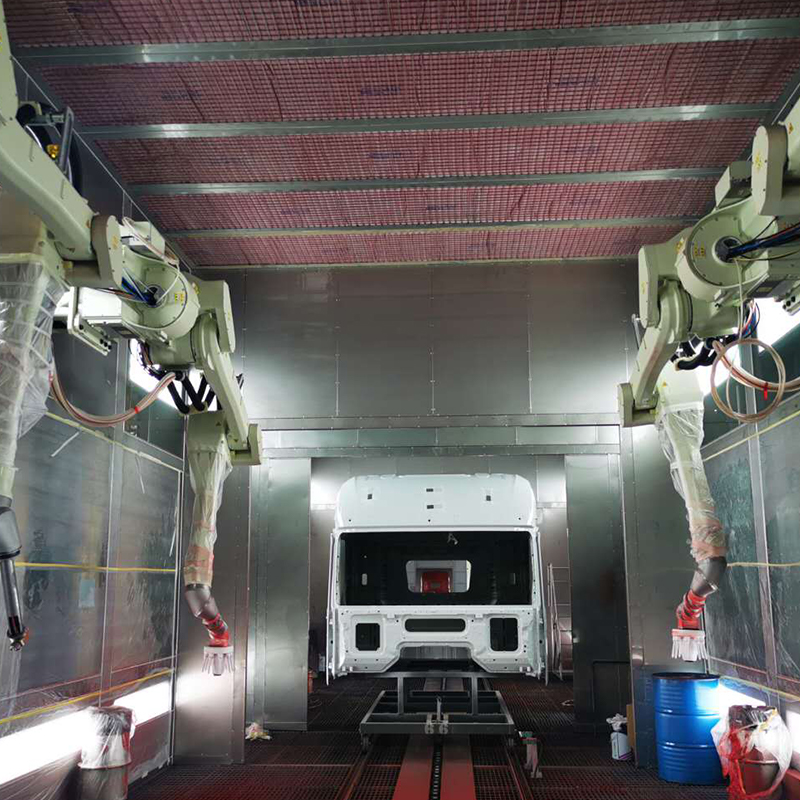 Heavy Vehicle Spray Booth for Large EquipmentLarge custom spray booth with powerful airflow, multi-stage filtration, and integrated curing for trucks, construction machinery, and oversized parts.View Product →
The table is a starting point, not a substitute for shop-floor measurements. Measure the tallest and widest part, add fixture and conveyor clearance, then confirm the booth’s working height and filter access. A 10% to 15% margin on the part envelope is often more useful than a theoretical airflow calculation that ignores real part loading.
Most paintline spray booth problems show up at the conveyor interface. The booth may be excellent on its own, but if the conveyor opening is undersized, parts swing into the booth wall, or the load/unload zone blocks the next fixture, throughput drops. In a continuous line, the booth must be designed around the conveyor pitch, the hanger type, and the part’s center of gravity.
Floor conveyors, overhead conveyors, and self-propelled hoist systems each impose different constraints. Overhead conveyors need clean chain paths and drip protection above the booth. Floor conveyors need pit design, floor flatness, and maintenance access that does not break the booth’s air seal. Roller table automation works well for flat or palletized parts but adds transfer points that can introduce dust. The practical answer is to size the booth and conveyor together, then check maintenance access with the booth doors closed and the line running.
 Floor Conveyor System for Coating LinesFloor-mounted conveyor with belt, roller, or chain options and adjustable speed for stable material flow between coating and drying processes.View Product →
For EV and automotive paint lines, the conveyor also affects color change and curing. A booth that sits between two drying zones must handle heat gain and air pressure balance. That is why automotive and EV manufacturing solutions usually treat the spray booth and conveyor as one design package. If the booth is bought first and the conveyor later, the project often pays for unnecessary transitions, extra ducting, or a compromised maintenance aisle.
Environmental compliance is not a final permit stamp. It affects booth airflow, filter selection, duct routing, and even the cleaning schedule. Particulate from dry filters, VOC-laden exhaust, and paint waste all need a defined path. A booth that looks compliant on paper can fail an inspection if filter housings leak, duct dampers are inaccessible, or the exhaust stack is too close to a fresh-air intake.
Operating cost is equally practical. Make-up air heating, fan power, filter consumption, and downtime for cleaning are the recurring costs that outweigh the initial booth price over a five-year horizon. A booth with generous filter access and properly sized access doors may cost more upfront but reduce labor hours and production interruptions. For lines with solvent-based coatings, waste gas treatment equipment should be selected with the booth’s exhaust volume and solvent load in mind, not added after the booth is installed. Dust collectors and waste gas treatment are not accessories; they are part of the booth’s operating envelope.
Ask for a filter loading estimate, a maintenance access plan, and a duct layout that shows every damper and test port. These are the details that determine whether the booth passes inspection and stays online. They also reveal whether the supplier has actually integrated a paintline spray booth into a production line before, rather than only built standalone cabinets.
Use the following checklist to compare quotes on the same technical basis. It is short enough for a project meeting and specific enough to expose gaps in a supplier’s proposal.
The strongest proposal is not the one with the lowest booth price. It is the one that shows the booth, conveyor, filtration, and exhaust as a single system, with clear maintenance access and measured airflow. That is the difference between a paintline spray booth that supports production and one that becomes a bottleneck.
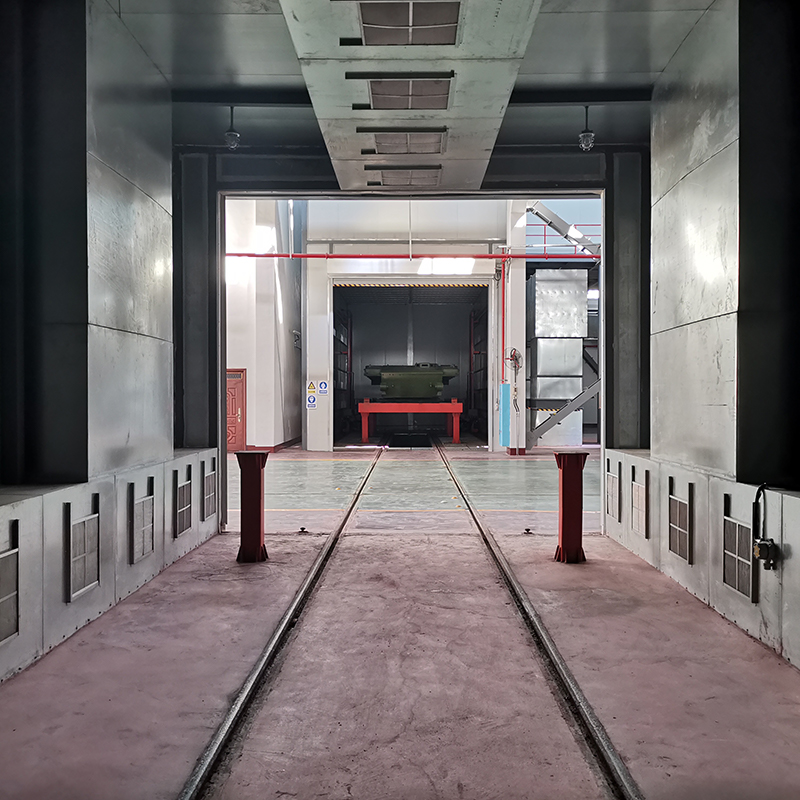
The spray paint line is a complete automated coating system, including spraying, drying, curing, and conveying processes. It features stable operation, uniform spraying effect, and good sealing perfor...
See Details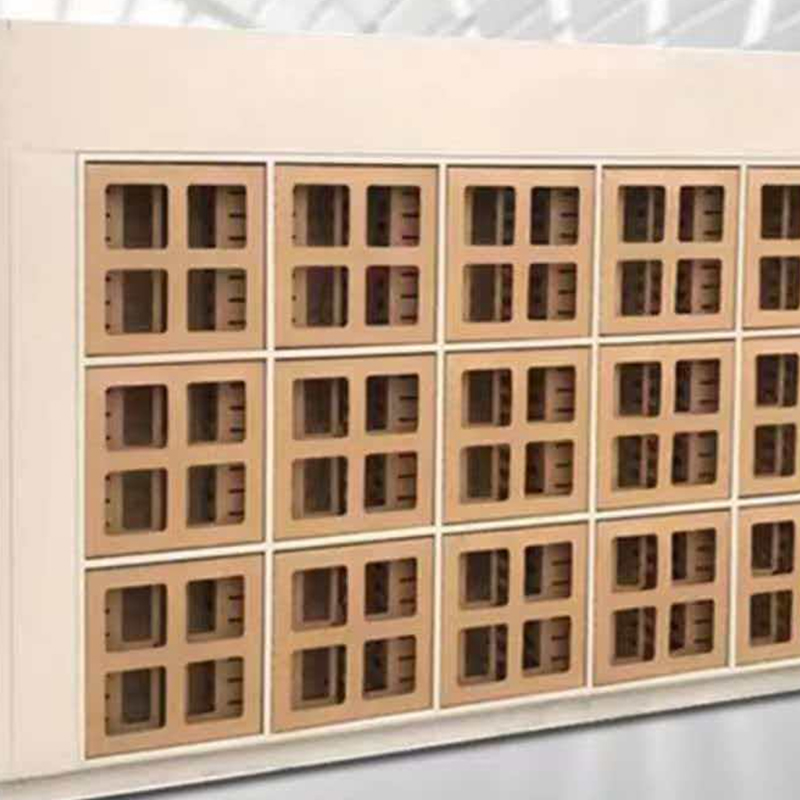
Cardboard Paint Arresto is professional equipment for capturing and filtering paint mist, mainly made of high-quality corrugated cardboard, filter cotton, and waterproof coating. It adopts a modular d...
See Details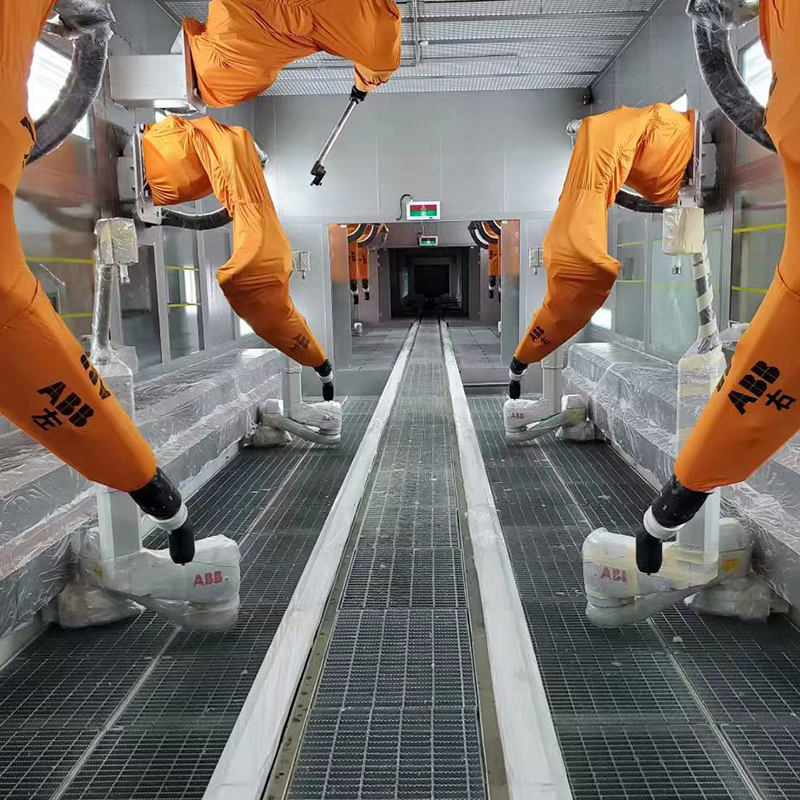
Professional spray coating line specially designed for motor casings, applicable to various motor casing types (electric vehicle motor casing, industrial motor casing, household motor casing, high-tem...
See Details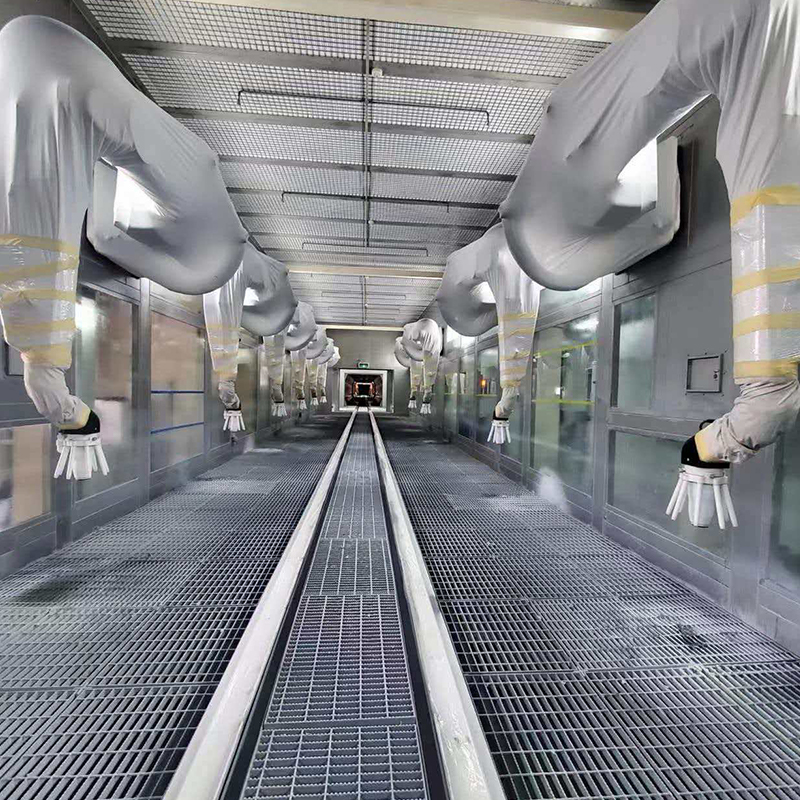
Professional spray coating line specially designed for car wheel manufacturing and refurbishment, applicable to various car wheel types (steel wheel, aluminum alloy wheel, forged wheel, cast wheel, pa...
See Details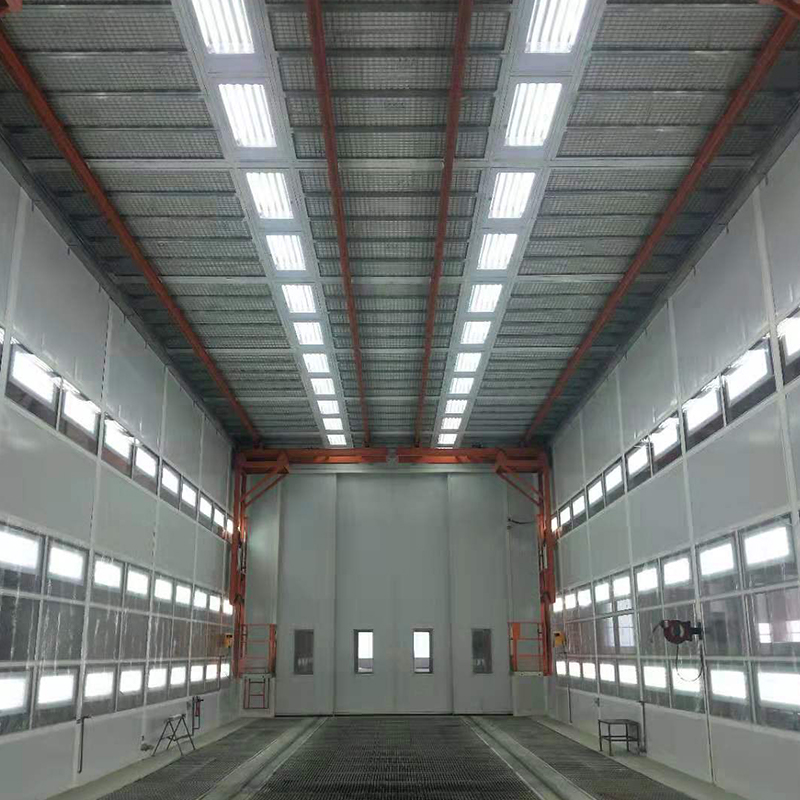
Professional painting line specially designed for grain tank truck body manufacturing and refurbishment, applicable to various grain tank truck types (grain transport tank truck, bulk grain tank truck...
See Details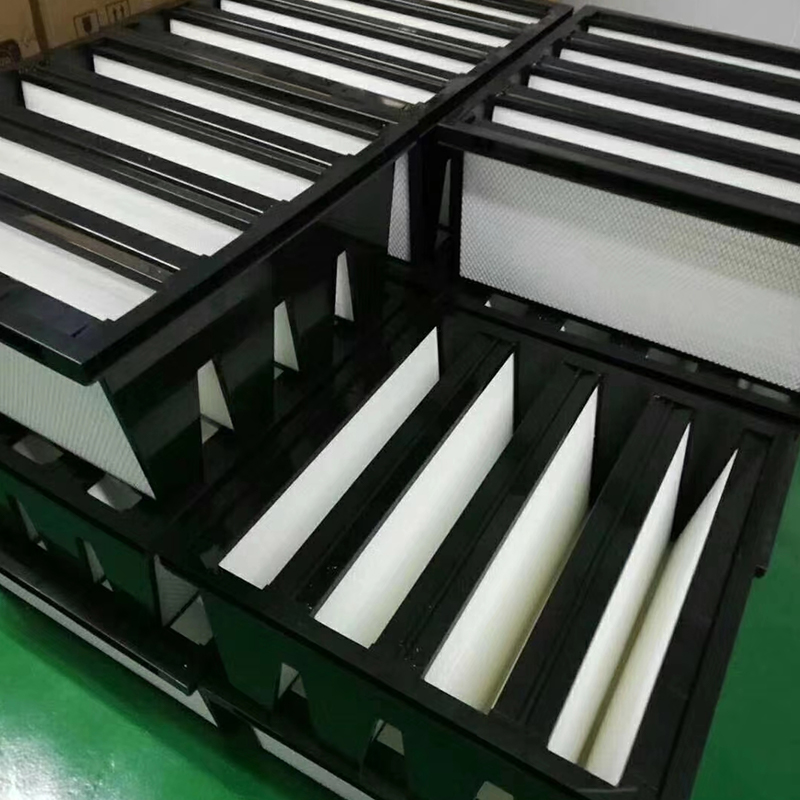
Dry-Type Paint Mist Filter is a core component for paint mist treatment, mainly made of high-quality filter materials (glass fiber, activated carbon, non-woven fabric). It has dense and uniform filter...
See DetailsBuild Your Customized Industrial Coating System
Send us your workpiece information, production capacity, coating process, workshop layout, and environmental requirements. Yueze will help evaluate your project and develop a suitable coating, conveying, drying, and environmental treatment solution.
Main menu
Products
Contact Us
Company Address:
No. 12, Park Avenue, Shanggang Industrial Park, Jianhu, Yancheng City, Jiangsu Province
Message Us Right Now!

Follow us: